Profhilo Versus Filler: How It Spreads Across the Whole Face
By Dr. Kim7 min read
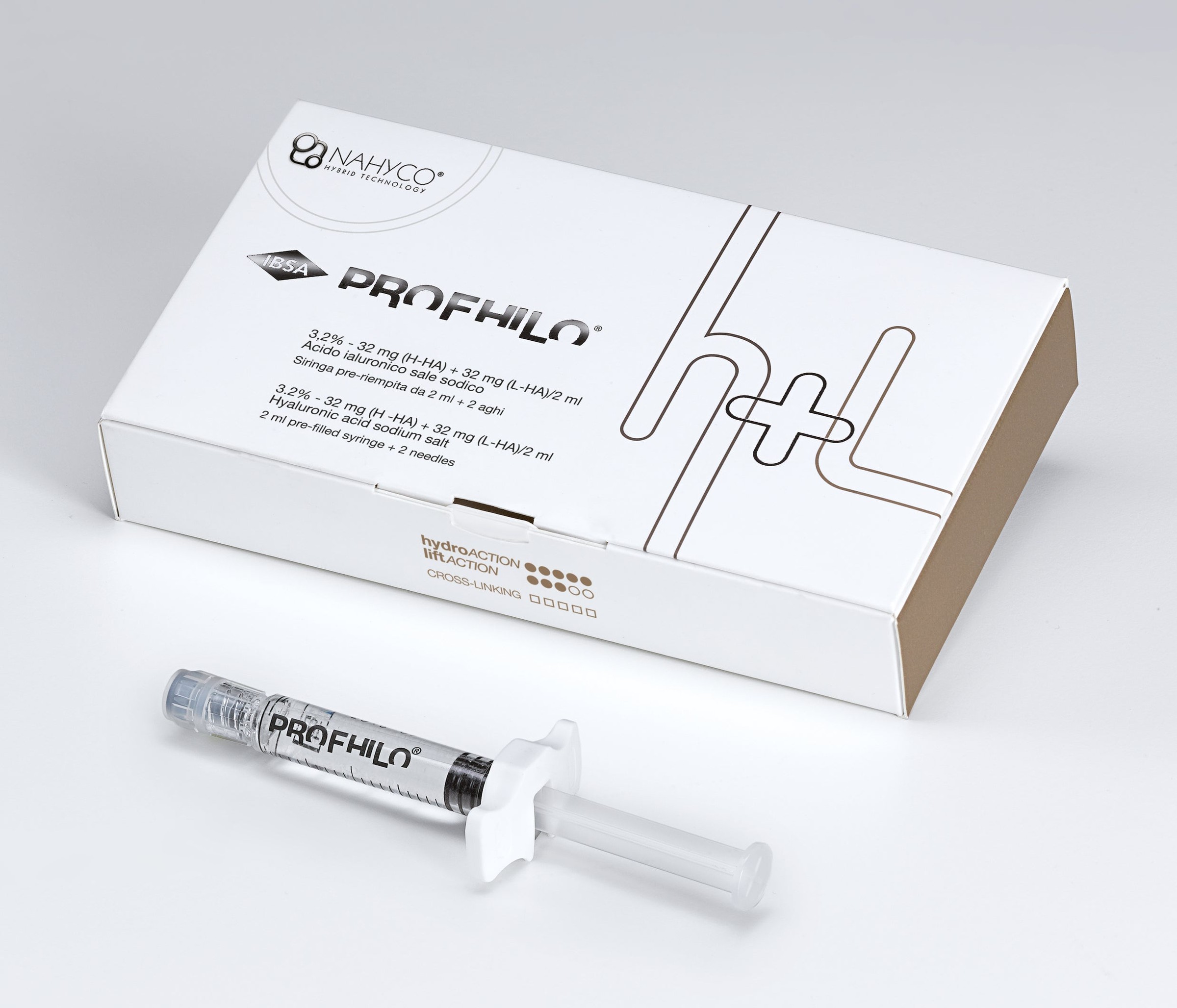
Anyone trying Profhilo for the first time tends to wonder about it. It's injected with hyaluronic acid, just like a filler, so why doesn't it create a bump the way filler does at the nose or lips? And why do people say the skin looks moist and firm all over the face, not just at the injection points?
To answer that, you need to understand that Profhilo is made differently from filler, and it works on the skin differently too. Both use hyaluronic acid, but the purpose, the injection method, and the path it travels through the skin are all different. Walk through these differences one by one and it becomes clear why the whole face ends up looking firmer.
How is Profhilo different from filler?
Standard filler is injected precisely into spots that need volume, like the tip of the nose or the lips, with the goal of filling that exact spot. Profhilo, on the other hand, is spread thinly across the whole face with the goal of boosting the skin's own strength.
Even though both use hyaluronic acid, they're manufactured differently. Filler is made by cross-linking strands of hyaluronic acid with a chemical cross-linker, essentially a glue that binds molecule to molecule, so it holds its shape for a long time. Profhilo uses heat instead of chemical glue to bind the molecules gently, giving it a spreading quality rather than a firm, solid one. Put simply, if filler is a material stacked like bricks to build a shape, Profhilo is closer to water that soaks in and spreads.
Breaking down why Profhilo differs from filler in more concrete terms:
- The cross-linking method is different. Filler is bound tightly with chemical cross-linkers to hold its shape, while Profhilo is bound gently with heat so it spreads easily, making it suited to diffusion rather than volume.
- The number of injection points is different. Filler is concentrated into one desired spot, while Profhilo is placed at ten points across the face so a wide area gets stimulated evenly.
- The expected response is different. With filler, the volume at the injection site itself is the result, but with Profhilo the result is the cellular response the hyaluronic acid triggers, so you should look for elasticity changes that build over time rather than immediate volume.
Why is it placed in small amounts at ten points?
Profhilo is made by mixing large-molecule and small-molecule hyaluronic acid in equal parts. The large molecules are strong at holding onto water, while the small molecules move easily between tissues. Combining the two lets the product spread gradually from the injection site without dispersing all at once, staying in place for 2 to 4 weeks.
This treatment isn't done by injecting deep into one point on the face. Instead, a very small amount is placed at five set points on each side, across the forehead, cheeks, and jawline, for ten points total. The hyaluronic acid at each point gradually spreads sideways through the tissue beneath the skin, and as the spread from these multiple points overlaps, it ends up producing an effect that's evenly distributed across the whole face.
This is exactly why no single spot ends up looking puffy. It isn't a material meant to be stacked in one place to begin with. It's designed to spread widely.
How it attracts and holds water
Hyaluronic acid can attract and hold up to 1,000 times its own weight in water. Like a sponge soaking up water and swelling, hyaluronic acid draws in surrounding moisture and holds onto it.
One reason skin becomes dry and thin is that the amount of hyaluronic acid naturally present in the skin decreases with age. The hyaluronic acid added through Profhilo is reported to fill that gap and hold onto moisture, working to ease the feeling of dryness and sagging.
What's more, because Profhilo's hyaluronic acid is bound with heat, it doesn't break down all at once, it's absorbed gradually over time. That's why its moisture-holding effect isn't a short flash that fades quickly. It's known to continue for anywhere from 4 weeks to 6 months.
Collagen stimulation matters more than hydration
The most important part of Profhilo's effect isn't actually the moisture itself, it's what happens next. Two proteins, collagen and elastin, support the skin's elasticity. Think of collagen as the pillars holding up the skin, and elastin as the rubber bands connecting those pillars, and it's easy to picture.
The cells that make both of these are fibroblasts, and their activity slows down with age. Hyaluronic acid spread widely beneath the skin is reported to stimulate these fibroblasts. The exact pathway is understood to work by hyaluronic acid attaching to gate-like structures on the cell surface that receive signals, sending the cell a message to rebuild the tissue.
Once fibroblasts receive that signal, they ramp up activity to produce new collagen and elastin. It's similar to raising a new pillar next to an old one. This process is often called bioremodeling, essentially rebuilding tissue biologically. Profhilo's core principle isn't simply plumping the skin with moisture, it's prompting the skin to produce more of its own elastic components.
The response spreads across the whole face
Filler only produces a response near the injection point, but with Profhilo, the response that starts at the ten injection points spreads out into the surrounding tissue. As explained above, the hyaluronic acid itself spreads sideways, and it stimulates fibroblasts everywhere it reaches.
That's why a treatment placed at one point on the forehead affects the skin texture across the whole forehead, and why the multiple points on the cheeks and jawline connect with each other to create a feeling of firmness across the entire lower face.
This diffusion range is also why so many people say their skin feels different before and after treatment. Rather than one localized area standing out, the texture and elasticity rise evenly across the whole face, so a single spot might not look dramatically different on its own, but the overall impression often changes noticeably, according to reports.
Why two shots, four weeks apart?
It takes time for fibroblasts to respond to stimulation and produce new collagen and elastin. One round of stimulation isn't enough, the response has to be reinforced at intervals for it to build and continue.
That's why Profhilo is typically done as a set of two sessions, 4 weeks apart. If the first session wakes up the fibroblasts, the second sends another signal to keep that response going.
If the interval is too short, the new stimulation arrives before the first response has settled in, which can reduce efficiency. If it's too long, the effects of the first stimulation may have faded before the next one starts, breaking the continuity of the response. A 4-week interval is understood to be timed so the response builds naturally between the two sessions.
How long do the effects last?
The hyaluronic acid in Profhilo is gradually absorbed by the body and disappears over time. But the collagen and elastin it stimulated remain in the skin for 3 to 6 months even after the hyaluronic acid is gone. That's why the effect is reported to last longer than the hyaluronic acid itself sticks around.
That said, the newly made collagen also breaks down over time through the body's normal metabolic process. So finishing one set doesn't mean the results last forever. Elasticity tends to gradually return to its previous level around the 6-month mark, according to reports.
Getting a maintenance session around this time, before collagen starts to decline, is a common way people keep stimulating the skin to sustain the firmness.
References
Korean Dermatological Association, Ministry of Food and Drug Safety (MFDS), American Academy of Dermatology (AAD), and U.S. Food and Drug Administration (FDA).
Was this helpful?
About this article
Written by a practising aesthetic physician and intended for general education — not a substitute for individual medical advice.
Read next
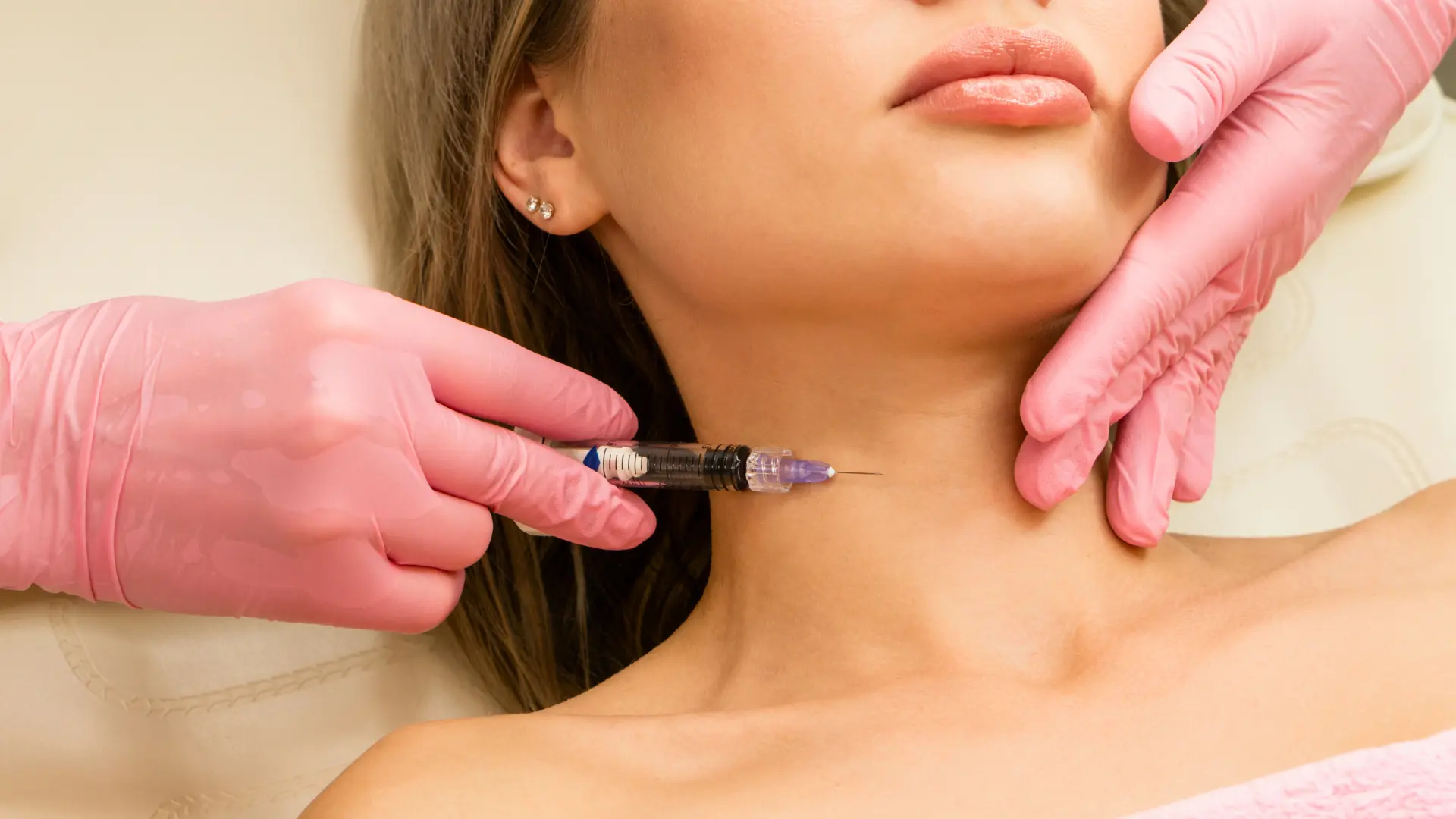
Neck Skin Booster: Results and Number of Sessions, and Is It Right for Neck Lines?
A neck skin booster isn't a volumizing treatment like filler. It's a way of placing very thin hyaluronic acid throughout the dermis to lift hydration and collagen from within. Here's why the neck ages before the face, and how the results build over time.
By Dr. Kim
Rejuran Results: When Do They Appear, and How Many Sessions and Intervals?
Rejuran places DNA fragments extracted from salmon into the skin, targeting the skin's own regeneration signals rather than adding volume. Here's a principle-first look at why this ingredient triggers fresh collagen production, how its purpose differs from a filler's, and why the treatment schedule and intervals are set the way they are.
By Dr. Kim
Nevus of Ota Treatment: Q-Switched Laser Sessions and Intervals
Nevus of Ota sits deep in the dermis rather than on the skin's surface, which is exactly why no amount of concealer can hide it. Here is a mechanism-focused look at why only a laser with a specific wavelength can reach that depth, and why treatment is spread across 6 to 10 sessions at 6 to 8 week intervals instead of being done all at once.
By Dr. Lee