Molluscum Contagiosum: Causes and How It Spreads, and Why Children Catch It Easily
By Dr. Kim6 min read
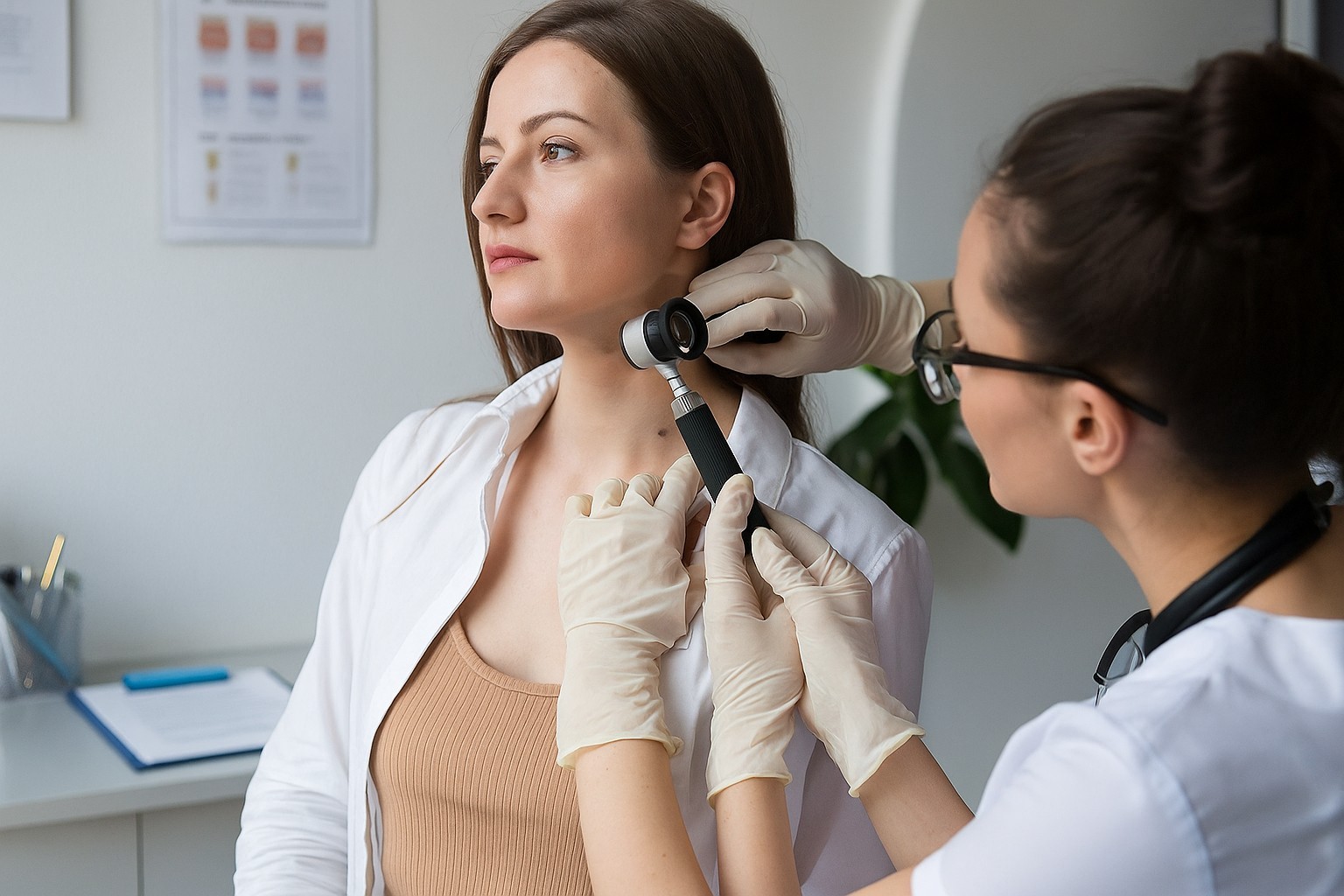
Molluscum contagiosum shows up as tiny, skin colored bumps scattered across the skin, giving it a slightly bumpy texture. It is common on a child's face or torso, but adults get it too.
Most people write it off as just a skin issue. But each bump is really a record of the virus copying itself over and over inside skin cells. Here is why it spreads so easily and how the virus actually moves from person to person.
The poxvirus that causes molluscum
Molluscum contagiosum is caused by the molluscum contagiosum virus (MCV), a DNA virus in the poxvirus family, the same broad family that once caused smallpox. Chickenpox and herpes, for comparison, belong to a completely different group, the herpesvirus family, so they work in different ways.
This virus does not travel through the body. It sets up shop only in the epidermis, the very outer layer of skin cells, and multiplies right there. Since it never reaches the bloodstream or internal organs, molluscum itself is generally considered a mild, self limited condition.
As the virus multiplies inside epidermal cells, those cells swell up and form the classic round bump. The little dip in the center of each bump, often called central umbilication, happens because the cluster of infected cells slowly breaks down starting from the middle outward.
Different poxviruses settle in different places even within the same family. Some dig deep and cause symptoms throughout the body, but molluscum contagiosum virus sticks strictly to the shallow, outer layer of skin. That narrow range is exactly why it tends to clear up without leaving a scar.
Can molluscum spread through the air?
For molluscum to spread, skin has to touch skin, or skin has to touch an object carrying the virus. That is a completely different route from something like a cold virus, which travels through the air via coughing or sneezing.
The reason is simple. This virus is built to grow only inside epidermal cells, so it has no pathway into the body through the respiratory tract or bloodstream. The only way it can reach a new person or a new spot on the body is through direct contact between skin surfaces.
The bumps and the material inside them carry a large amount of virus. Touching or squeezing a bump gets virus particles on your fingers, and the moment that hand or an object touches another patch of skin, a new infection can start.
Person-to-person spread and incubation period
The most common route is simple skin to skin contact. Kids often pick it up while roughhousing at the playground, or during contact sports like wrestling or judo where bare skin presses against bare skin.
For adults, the picture looks a little different. Molluscum that appears around the genital area is often transmitted through sexual contact, which is why it is sometimes classified as a sexually transmitted infection. If bumps show up in that area, it is worth seeing a doctor to rule out other skin conditions.
There is also a real delay between exposure and the bumps actually showing up, usually a few weeks and sometimes several months. That incubation period is the time the virus needs to gradually multiply inside epidermal cells before anything becomes visible.
Because of that lag, it is often impossible to pinpoint exactly when someone was exposed. Contact may have happened well before any bump appeared, and since nothing looks different on the surface during that window, a person can unknowingly pass it on to someone else.
Can it spread through towels and pool toys?
Molluscum does not only pass between people directly, it also travels through shared objects. Towels, bath sponges, pool floats, and bath toys, anything that touches skin directly, are the usual culprits.
Once virus particles leave the skin, they can linger on an object's surface for a while. So if someone uses a towel right after an infected person, the virus left behind on the fabric can transfer to their skin.
Pools and bathhouses, where lots of people's skin comes into close contact, are considered higher risk environments. It is not really the water itself spreading the virus, it is more that skin brushes against skin more often in those settings, and bath or pool toys tend to get passed around. Items like inner tubes or slide handrails that many children take turns holding can become carriers for the same reason.
Why does scratching spread it across the body?
Molluscum often does not stay in one spot, it spreads sideways or shows up in new areas, and scratching is usually behind that.
When a bump gets scratched or picked at with a fingernail, the virus inside gets onto the nail and fingers. Touching other skin with that same hand carries the virus to a new location, where it settles in and multiplies again. This spreading within a person's own body is called autoinoculation.
It is also common to see bumps line up along a scratch mark. That happens because a break in the skin weakens the barrier, giving the virus an easier path in, much like water seeping in more easily through a crack than through solid ground.
Why do children catch it more easily?
Molluscum is especially common in young children. One reason is that a child's skin barrier is still developing, and many kids also have conditions like atopic dermatitis that further weaken that barrier. A weaker barrier makes it that much easier for the virus to get into the epidermis.
Children also spend a lot of time in close physical contact through play, and they tend to touch their face and body with their hands often. Every one of these small habits adds up to more chances for the virus to spread.
Adults generally have a sturdier skin barrier, so they pick it up less easily. That said, in people with weakened immune function, bumps can spread more widely and linger longer even in adulthood, because immune cells are slower to find and clear out the infected epidermal cells.
In the end, how easily molluscum spreads and how long it sticks around depends less on the virus itself and more on a person's skin barrier and immune status. Exposed to the same amount of virus, someone with a strong barrier and an active immune system often comes through with little trouble.
How to manage molluscum so it doesn't spread
Most cases of molluscum clear up on their own over time as the body's immune response gradually clears the virus. What matters most during that stretch is managing it carefully so it does not spread further or pass to someone else.
- Do not touch or squeeze the bumps. Squeezing releases the virus inside onto your hands and the surrounding skin.
- Keep towels, clothing, and bath items separate from the rest of the family. This closes off the route where virus left on a surface reaches the next person.
- Cover affected areas with light clothing or a bandage. This simply reduces the chance of skin to skin contact.
- Keep skin moisturized so it does not dry out or crack. A stronger skin barrier makes it harder for the virus to get in.
- Choose a quick shower over a long soak in low temperature bathwater. Skin that has been soaked for a long time has a weaker barrier, which makes it easier for the virus to get in.
Sticking with these habits while you wait usually leads to clearing with little to no trace left behind. If the bumps keep multiplying or stick around for a long time, having them removed in office is also worth considering.
References
Korean Dermatological Association, American Academy of Dermatology (AAD), and Ministry of Food and Drug Safety (MFDS).
Was this helpful?
About this article
Written by a practising aesthetic physician and intended for general education — not a substitute for individual medical advice.
Read next
Pigmentation After Laser Hair Removal: Why It Happens and How to Prevent It
Laser hair removal works by using heat to destroy melanin inside the follicle, but when that heat spreads into the epidermis, it can leave a burn that later turns into hyperpigmentation. Here is why burn risk changes with skin tone, wavelength choice, and cooling method, along with ways to reduce it beforehand.
By Dr. Lee
Water-Only Face Washing: Effects, Precautions, and Methods by Skin Type
Water-only cleansing means washing your face with plain water instead of a cleanser, so the skin's own oils and moisture film stay intact. Here is the science behind why this can help skin with a sensitized barrier, along with when it works and when it does not.
By Dr. Kim
Flat Wart Causes and Symptoms: Why They Spread When Squeezed, and Treatment
Flat warts are a viral skin condition, so picking or scratching at them doesn't clear them up, it spreads them further. Here's why that happens, how to tell them apart from moles or acne, and the logic behind removal and preventing recurrence.
By Dr. Kim