Men's Skincare Routine: In What Order Should You Cleanse and Moisturize?
By Dr. Kim7 min read
Men's skincare often gets reduced to "just wash your face properly." In the clinic, plenty of men picture nothing more than a single bottle of lotion when they hear the word skincare. But men's skin has a few clear biological differences from women's skin, and once you understand those differences, the right order of care basically falls into place on its own. From the size of the oil glands to skin thickness to the daily habit of shaving, men's skin deals with conditions that women's skin simply doesn't.
How is men's skin different from women's?
On average, men's skin is thicker than women's and has a higher collagen density. That's because androgens, the male hormones, stimulate fibroblasts (the cells that produce collagen in the skin) more actively. Think of it like a thick brick house versus a thin wooden shed: the brick house holds up better against outside impact. In the same way, men's skin tends to be relatively more resistant to irritation.
That doesn't mean it needs no care at all. If anything, the oil glands and pores are larger and more active, which brings on a different set of problems. So men's skincare shouldn't just be "a smaller version of women's products." It needs its own approach built around these differences.
Why do men produce more oil?
The oil glands carry receptors that respond to androgens. The higher the androgen level, the bigger the oil glands grow and the more oil they produce. Since men generally run higher androgen levels than women, men tend to produce more oil even at the same age.
Oil itself isn't inherently bad. It forms a thin film that coats the skin's surface and keeps moisture from evaporating. The problem starts when too much oil builds up and mixes with dead skin cells, clogging the pore openings and leading to acne or breakouts. So the first goal of men's skincare isn't to strip oil away completely, but to keep it at a manageable level.
How does daily shaving affect skin?
Shaving is a physical stress that only men's skin faces, day after day. As the sharp blade glides over the stratum corneum (the outermost, protective layer of skin), it scrapes away not just facial hair but some of the surface skin cells along with it. The stratum corneum is a thin shield that protects the skin from the outside world, and shaving peels a small layer of that shield off every single day.
The result is a thinner skin barrier that lets moisture escape more easily. Outside irritants also find it easier to get in through a weakened barrier. That's exactly why stinging, redness, and folliculitis (small inflamed bumps around hair follicles) show up so often after shaving.
Shaving in the direction hair grows, and softening the skin beforehand with shaving foam or gel, both help. Less friction means less of the stratum corneum gets scraped away. Right after shaving, reaching for a gentle, soothing product instead of something high in alcohol also helps the barrier recover faster.
The blade itself matters too. A dull blade doesn't cut cleanly in one pass, so it drags over the same spot repeatedly, and that repeated friction does more damage to the stratum corneum. Simply swapping blades more often is often enough to noticeably cut down on post-shave irritation.
How often and how should you wash your face?
Having more oil doesn't mean the answer is to wash harder or more often. The surfactants in a cleanser strip away oil, but they also wash off the natural lipids that make up the skin barrier. Cleanse too often and the skin can end up dry, and in a strange twist, the body may respond by producing even more oil to compensate for that dryness.
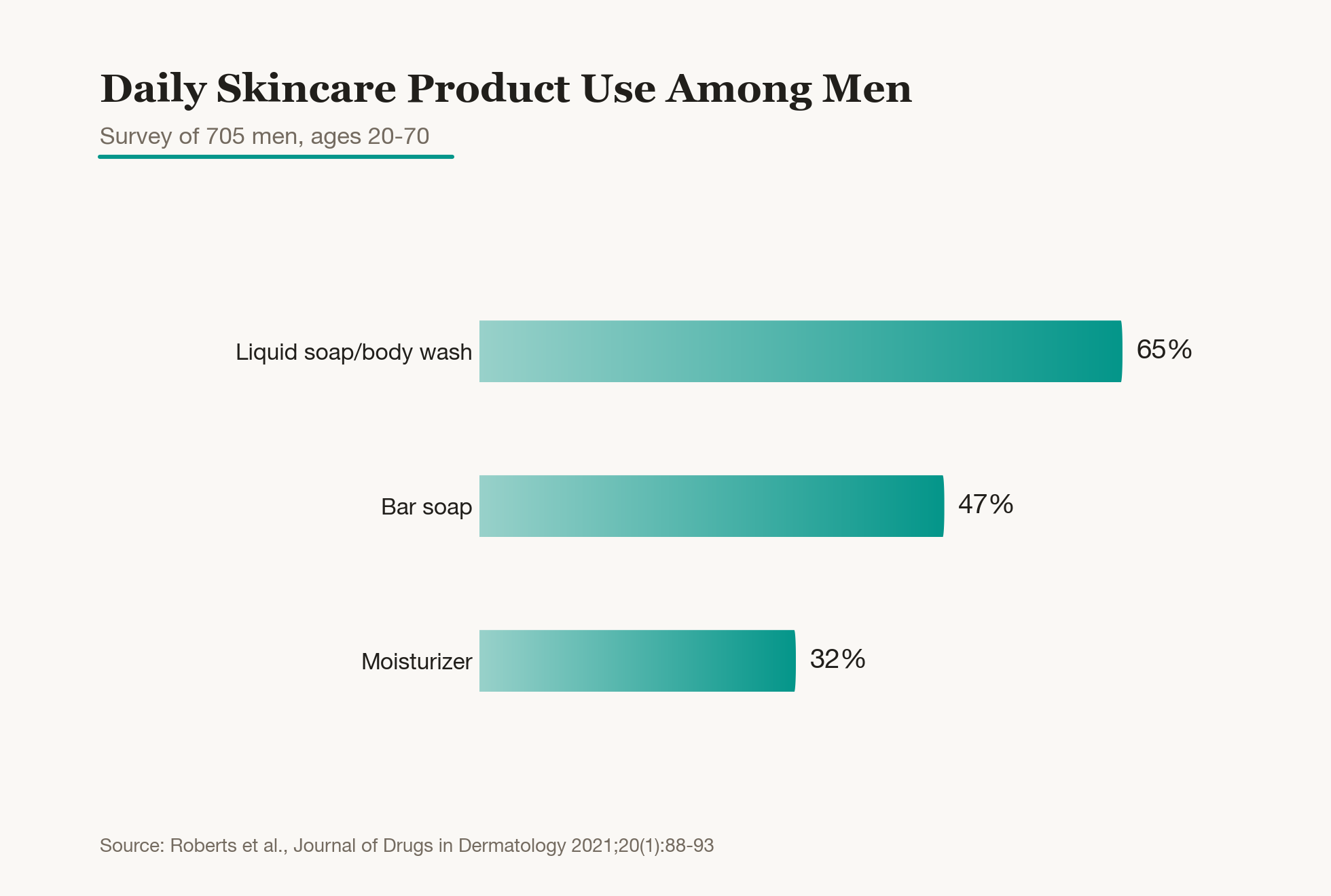
Washing twice a day, morning and evening, with lukewarm water is generally the recommendation. Hot water dissolves the oil film too aggressively and weakens the barrier further, so it's best avoided. After washing, pat the skin dry with a towel instead of rubbing, since rubbing irritates the stratum corneum more. Some men wash three or more times a day to rinse off sweat after exercise; in that case, rinsing with just lukewarm water instead of cleanser is an easier way to ease the load on the barrier.
Do you still need moisturizer and sunscreen with oily skin?
It's tempting to think that having a lot of oil means you can skip the moisturizer, but oil and hydration are two separate issues. Oil is a fatty substance, while water content inside the skin is managed through an entirely different system, so skin can easily be oily and dehydrated at the same time. A light gel or lotion type moisturizer is a good choice, since it adds moisture without the heavy, greasy feel.
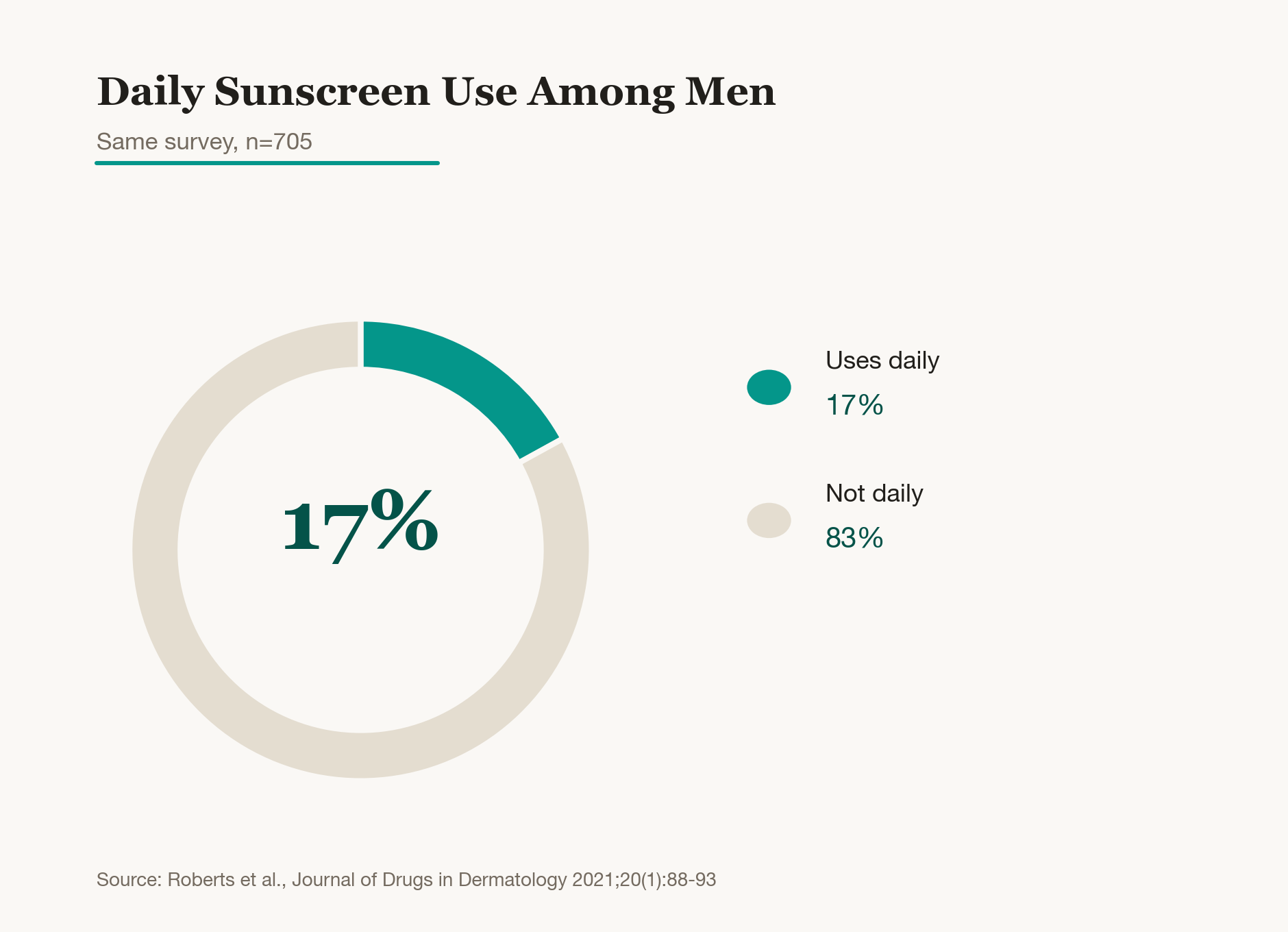
Sunscreen is the single most fundamental step in skincare, regardless of age. UV exposure ramps up the activity of enzymes that break down collagen in the skin, which speeds up sagging and pigmentation. Men who spend a lot of time outdoors tend to accumulate more UV exposure overall, and making sunscreen a daily morning habit is known to help slow down the pace of skin aging over the long run.
Four ingredients that suit men's skin
Rather than piling on complicated steps, it's easier to stick with a routine once you understand a handful of key ingredients and use them in order. The following ingredients are known to suit the particular characteristics of men's skin well.
- niacinamide: helps calm overactive oil glands and soothes the pores. It also supports the production of ceramides, which make up the skin barrier, so it's useful for helping a barrier thinned by shaving recover.
- salicylic acid: being oil soluble, it can penetrate deep into oil clogged pores and clear out the buildup of dead skin cells inside. It's commonly used to prevent pore related breakouts in skin with high oil output, like men's skin often has.
- retinol: speeds up skin cell turnover (the cycle in which surface skin cells get replaced with new ones) and also stimulates collagen production. Since it can cause some irritation, it's best to start with a small amount and increase gradually.
- ceramide: one of the lipids that make up the skin barrier, and it helps fill in the barrier after it's been worn down by shaving or cleansing. A stronger barrier naturally means less moisture loss.
How skincare changes after the mid-30s
In your 20s, the focus is mostly on controlling oil and preventing acne. Once you pass your mid-30s, though, collagen loss and reduced elasticity become part of the picture too. Even if androgen levels don't drop much, the activity of the fibroblasts that produce collagen gradually slows down with age.
From this stage on, it helps to add retinol or antioxidant ingredients on top of oil control ingredients. And sun protection should stay the one constant, non-negotiable step across every age group.
Sleep and stress affect skin condition as well. During sleep, cell activity that repairs the day's skin damage ramps up, and when sleep is cut short, that recovery window shrinks, slowing down barrier repair. Stress hormones also overlap with some of the same pathways that stimulate the oil glands, so it's not just a feeling when breakouts seem to flare up during especially stressful periods; there's real biology behind it.
In the end, men's skincare, at any age, comes down to two core principles: protect the barrier and block UV exposure, and layer in whatever extra ingredients the moment calls for. You don't need to pile on elaborate steps. Sticking to just these two principles consistently is often enough to make a visible difference in skin condition.
References
Korean Dermatological Association, American Academy of Dermatology (AAD), and Ministry of Food and Drug Safety (MFDS).
Was this helpful?
About this article
Written by a practising aesthetic physician and intended for general education — not a substitute for individual medical advice.
Read next

Skin Booster Injection and Filler Differences: Hyaluronic Acid Hydration and Duration
Skin boosters feel far more hydrating than anything you apply topically. Here is why: how hyaluronic acid grabs water deep inside the dermis, how that inner glow actually forms, how it differs from dermal filler, and how long the effect really lasts, explained simply.
By Dr. Lee

Skincare in Your 20s: How to Use Sunscreen and Retinol
Skin in your 20s looks resilient, but the ability to produce collagen already starts slowing down around this time. Basic habits like cleansing, moisturizing, and sun protection shape how your skin looks decades from now. Here is a breakdown of when and how to start using retinol and niacinamide, and why.
By Dr. Kim

Sebaceous Hyperplasia: Causes, How to Tell It From Acne, Removal and Recurrence
If you have a yellowish bump on your forehead or cheek that won't go away no matter how much you squeeze it, it might not be acne at all, but sebaceous hyperplasia. Here's an easy breakdown of why enlarged glands form a dimpled bump, how it differs from acne, how electrocautery clears it, and why it tends to come back.
By Dr. Kim