Jamber Thread Principle and Collagen Effect, Including Differences From Cog Threads
By Dr. Kim6 min read
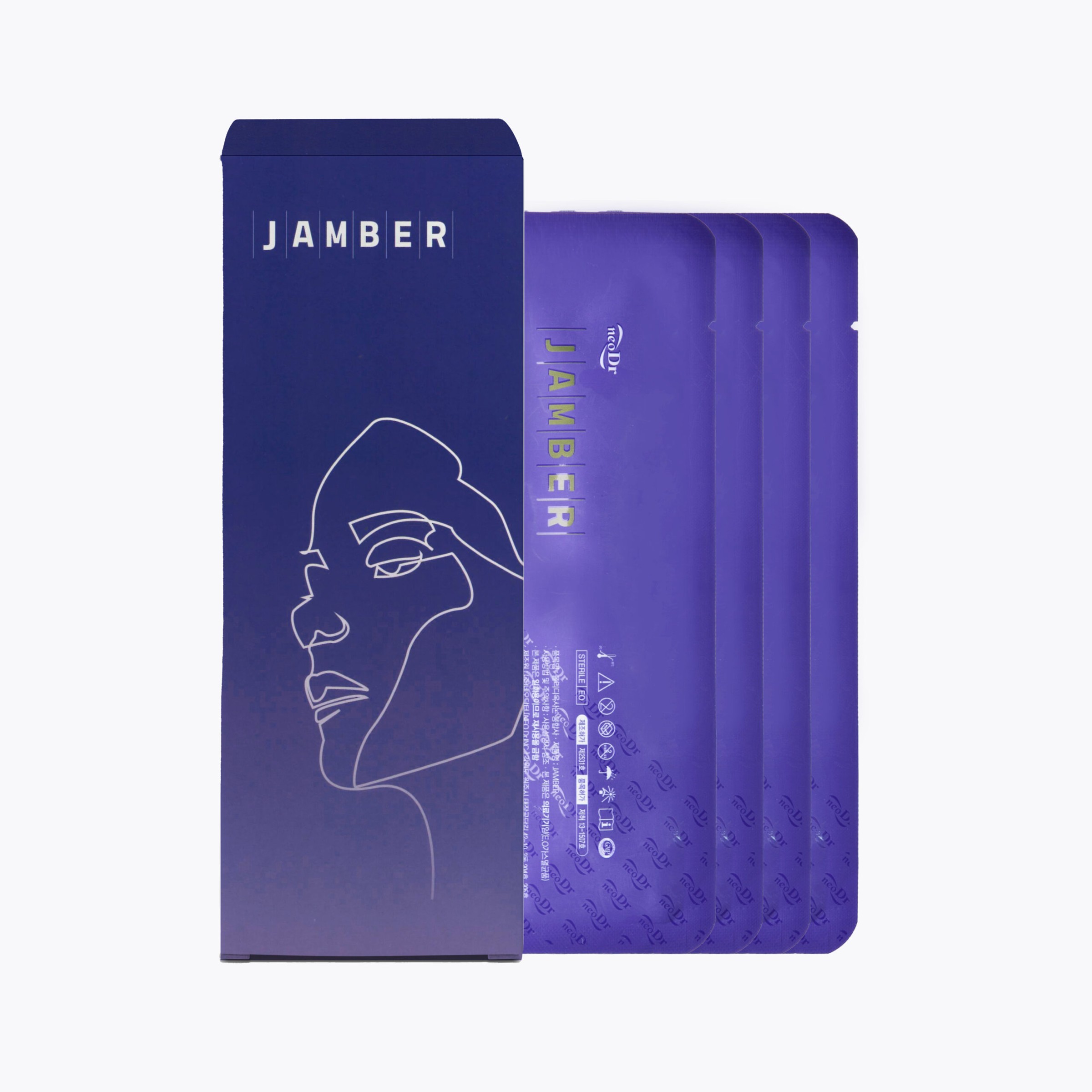
When people hear "thread lift," they usually picture sagging skin being pulled up. But more and more threads are now used the opposite way, to fill in hollow areas like the nasolabial folds or under the eyes where volume has simply been lost. Jamber thread is one of them.
Jamber thread looks nothing like a traditional cog thread. There are no hook-shaped barbs on the surface. Instead, the thread itself is wound tightly like a spring. Let's walk through why this shape matters and how it grips tissue differently from other dissolving threads.
What kind of thread is Jamber?
Jamber thread is made of PDO (polydioxanone, a medical thread material that breaks down naturally in the body and is also used in surgical sutures). Its defining feature is that the thread itself is coiled tightly, like a spring.
Because of this shape, a single thread takes up real volume once inserted. A tightly coiled spring occupies far more space than a plain strand, so when it's placed into a hollow area like the cheek or under-eye, it physically fills that empty space on its own. In that sense, the thread isn't so much pulling tissue as settling into place and occupying it.
This spring structure is built on a similar principle to what's often called a screw thread or tornado thread, where one or two fine strands are twisted into a spiral. Rather than bundling tightly, the spiral leaves small gaps between the coils. Those gaps matter later, because they're exactly where surrounding tissue can grow in and anchor the thread.
How does it hold tissue without barbs?
Cog threads work by using hook-shaped barbs to catch tissue and pull it upward. Jamber thread works differently. Instead of barbs, the spiral shape of the thread itself wraps around the surrounding tissue in three dimensions.
Think of coiling a spring around your finger. Even without pulling, the spring stays snugly in place because it wraps all the way around. Jamber thread works the same way: fat and connective tissue grow into the gaps between the coils, so the thread and the tissue become interlocked. The direction of the grip is the key difference. A cog thread pulls in one direction, while Jamber thread holds from all sides at once.
Because of this, Jamber thread is better suited to supporting tissue in place than to pulling it strongly upward. That's also why it tends to work better for filling hollow areas than for lifting sagging ones.
How do cog threads and Jamber threads differ?
The barbs on a cog thread's surface are designed to slide in smoothly one way and catch when pulled the other way, the same principle as a fishhook's barb. As those barbs grip the tissue and get pulled, sagging skin is drawn upward along with them.
That mechanism produces strong pulling force, but it has a limitation: the barbs only catch tissue at scattered points along the thread. Jamber thread, without barbs, has its entire spiral surface in contact with tissue, not just a few catch points but the whole length the thread travels through.
That's why cog threads excel at pulling force along a line, while Jamber threads excel at building volume through broad surface support. Which one gets used often comes down to whether the goal is lifting a sagging line or filling a hollowed area, and that difference traces straight back to their structure.
How collagen fills in while it dissolves
Like other PDO threads, Jamber thread gradually breaks down in the body into water and carbon dioxide. This process is reported to take roughly 6 months.
While the thread dissolves, the body treats it as a foreign material and mounts a healing response around it, similar to how the body kicks into repair mode after an injury. Small inflammatory and repair reactions unfold along the path of the thread, drawing in fibroblasts, the skin's own collagen-producing cells.
This is where the spring structure plays a second role. Because collagen settles along the broad surface area between the coils, it's described as filling in not as a thin line but as a somewhat voluminous band that follows the thread's path. That's why some texture remains in the area even after the thread has fully dissolved.
Why it's used for hollowing rather than sagging
In areas like the nasolabial folds, under the eyes, or the temples, where the skin thins out and hollows over time, volume loss is often the real issue rather than sagging. There simply isn't enough tissue left to pull up, which makes it hard for a barb-based cog thread alone to produce a natural result.
Jamber thread is described as better suited to these areas because it builds its own volume rather than pulling existing tissue. The spring structure already has some thickness on its own, and as collagen fills in around it, the hollow area gradually fills out.
That said, how much volume actually returns depends heavily on how hollow the area was to begin with, along with the number of threads used and how deep they're placed. So it's difficult to promise a specific number or volume of improvement.
For the same reason, thin, sensitive areas like under the eyes require extra care in choosing the depth and direction of the threads. The thinner the skin, the more the spring's own thickness can show through the surface, so selecting the right thickness and count for the area has a real impact on the final result.
Can it be combined with other treatments?
Jamber thread is often planned alongside other treatments rather than used on its own. Some common combinations include:
- With filler: Filler provides immediate volume right after treatment, while Jamber thread builds supporting structure underneath. Filler shows volume from the start but gradually gets absorbed over time, while the thread slowly builds collagen that adds longer-lasting support.
- With cog thread: Sagging areas get lifted with cog thread, while hollowed areas get filled with Jamber thread, mixing thread types by area. Since the two threads grip in different directions and serve different purposes, trying to solve every area with just one thread type can end up looking unnatural.
- With RF treatments: Jamber thread is sometimes paired with RF treatments that improve the skin's own elasticity. While Jamber thread builds volume and support in the deeper layer, RF works on elasticity closer to the surface at the same time.
Which combination fits best depends on how much hollowing and sagging is present, along with age and skin condition, so this is usually worked out through a consultation.
Precautions until it settles after treatment
A few precautions are recommended while the thread is settling into place early on.
- For the first few days after treatment, avoid strong pressure or massage on the area. The spring structure hasn't fully interlocked with the tissue yet, so firm pressure can shift the thread out of position.
- Swelling and bruising typically settle down over time, though recovery speed varies by area and by individual.
- Hot saunas or steam rooms are best avoided early on. When tissue swells and loosens, it can push the settling thread out of place.
These precautions exist to give the thread time to interlock with the tissue and settle in. Once that early period passes, the collagen-building process that follows is described as continuing naturally without needing much attention. Rather than checking for results too soon, treating the first few weeks as a natural recovery period the body works through on its own tends to lead to a more natural outcome.
References
Korean Dermatological Association, American Academy of Dermatology (AAD), and Ministry of Food and Drug Safety (MFDS).
Was this helpful?
About this article
Written by a practising aesthetic physician and intended for general education — not a substitute for individual medical advice.
Read next

Collaum PDO Threads and Cog Threads: Differences and Collagen Effects Compared
Instead of pulling hard with thick threads, Collaum works by placing many fine PDO threads close together to trigger collagen production. Each thread does very little on its own, but as a bundle they cover a wide stretch of skin. Here is how the collagen actually gets built, and which skin types respond best.
By Dr. Kim

Mint Thread Lift: Differences Between PDO and PCL, and How Long It Lasts
Mint thread is a cog thread with tiny barbs packed along its surface, made from either PDO or PCL. Here is how those barbs physically grip and lift tissue, and how each material's breakdown speed shapes how long the results last.
By Dr. Lee
Thigh Fat Treatments: Types, How They Work, Effect Differences and Aftercare
Thighs are one of the areas that stay stubborn even with disciplined exercise and diet. Localized fat treatments that act directly on fat cells through cooling, injections, or heat energy have become a common way to address these areas. Here is how each method actually breaks down fat cells, and how they differ.
By Dr. Kim