IPL Effects on Dark Spots and Redness, Including Sessions and Differences From Laser
By Dr. Kim8 min read
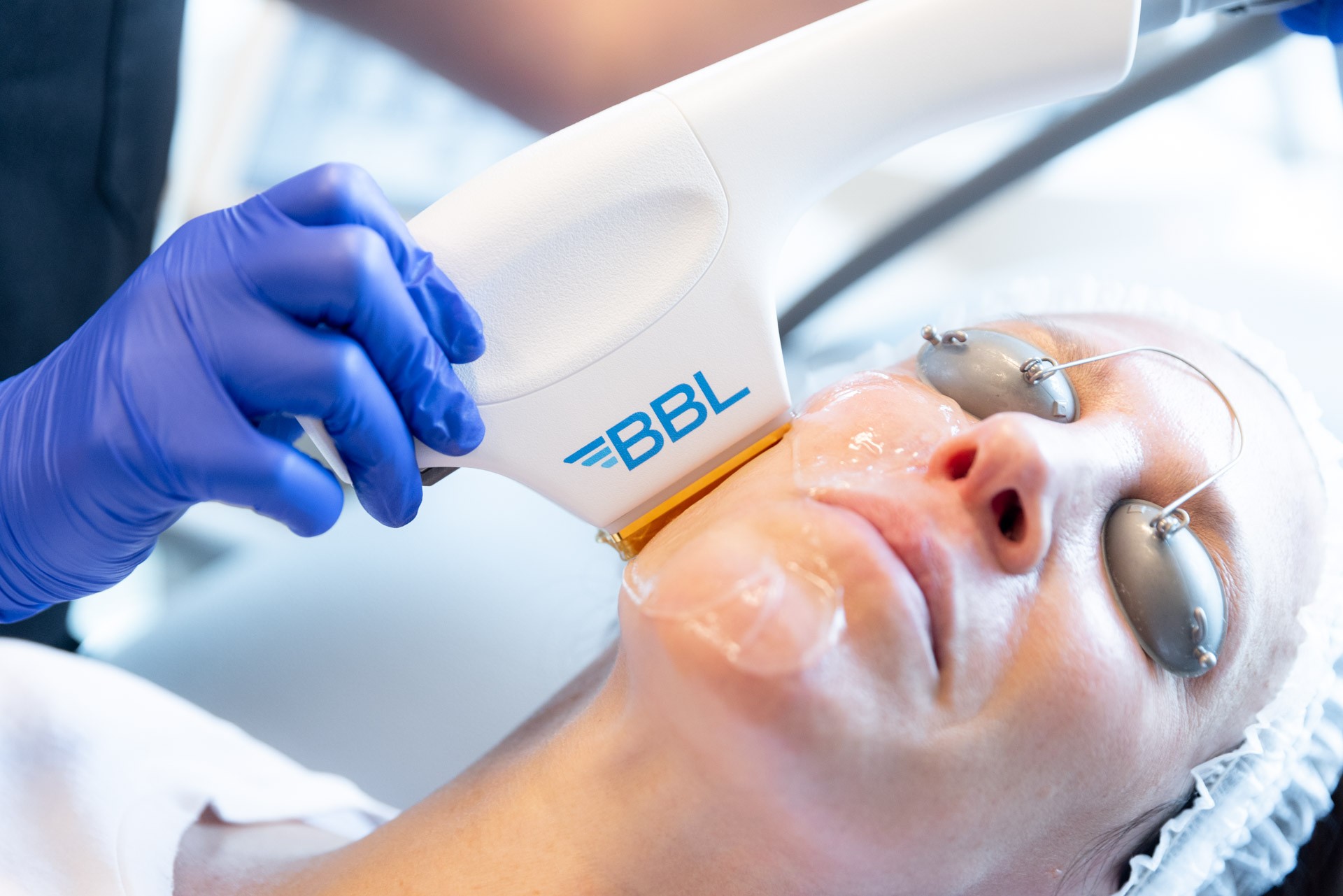
Most of us have more than one thing bothering us when we look in the mirror. Some days it's the dark spots that look especially stubborn. Other days it's the redness across the cheeks, or pores wide enough to make makeup sit unevenly. So it makes sense to wonder how a single dermatology treatment, IPL, ends up being recommended for all of that at once.
How can one device reach so many different problems? The answer is built right into the name. This piece walks through exactly what path IPL takes inside the skin, and why it's able to treat several concerns in the same session.
How is IPL different from a laser?
IPL stands for Intense Pulsed Light, meaning a strong burst of light delivered in short pulses. The key detail, unlike a laser, is that it isn't locked to a single, fixed wavelength.
Think of a laser as a flashlight with one pure color: set it to red, and only red light comes out. IPL is closer to a white flashlight with several colors blended together. In practice, it fires a broad band of light somewhere between 500 and 1200 nanometers all in one go. Filters can narrow that range down, but at its core, sending a mix of wavelengths into the skin at once is what sets IPL apart from a laser.
How it targets melanin and hemoglobin at the same time
For light to be absorbed by something in the skin, that something has to have an appetite for a particular wavelength. This is called selective photothermolysis, a term that sounds complicated but describes a simple idea: energy gets soaked up almost entirely by whatever likes that specific color of light, while the surrounding tissue is largely spared.
Two substances in the skin are especially good at absorbing light. One is melanin, the brown pigment behind spots and discoloration. The other is hemoglobin, the red pigment inside blood vessels that drives redness and visible capillaries.
The catch is that these two prefer different wavelengths. Melanin responds best to the shorter end of the spectrum, while hemoglobin absorbs across a somewhat wider range. A laser, locked to a single wavelength, can only go after one of them at a time. IPL's broad band, on the other hand, carries both the wavelength melanin wants and the one hemoglobin wants in the very same beam. That's the whole reason a single treatment can trigger both targets at once.
Picture it like carrying a full ring of keys instead of just one. Every door needs a different key, but with the whole ring in hand, you can find the right one no matter which door you're standing in front of. IPL's broad light works the same way: shorter wavelengths answer the call at melanin's door, and slightly longer ones answer at hemoglobin's.
Why do spots look darker after treatment?
Once melanin absorbs the light, that energy converts to heat. This heat is understood to briefly superheat and break apart the tiny pigment-carrying packets called melanosomes. The fragmented pigment is then either pushed upward through the skin's natural cell turnover and shed, or gradually cleared away by the body's own cleanup cells.
That's why spots often look darker, not lighter, for about 5 to 10 days after treatment. It's simply a sign the pigment is rising toward the surface. Once that window passes, the pigment sheds along with dead skin cells and fades in a way you can actually see.
How do capillaries and redness fade?
The light energy hemoglobin absorbs also converts to heat. When that heat reaches the walls of dilated or abnormally prominent capillaries, it's understood to trigger a gradual coagulation and contraction of the vessel. Over time, the affected vessel is slowly reabsorbed by the body and disappears, while the healthy vessels around it are left untouched.
Just like the melanin response, this doesn't wrap up in a single visit. Because how much heat reaches a vessel depends on its wall thickness and depth, the fading is often reported to happen gradually, across 3 to 5 sessions.
Why does darker skin need caution?
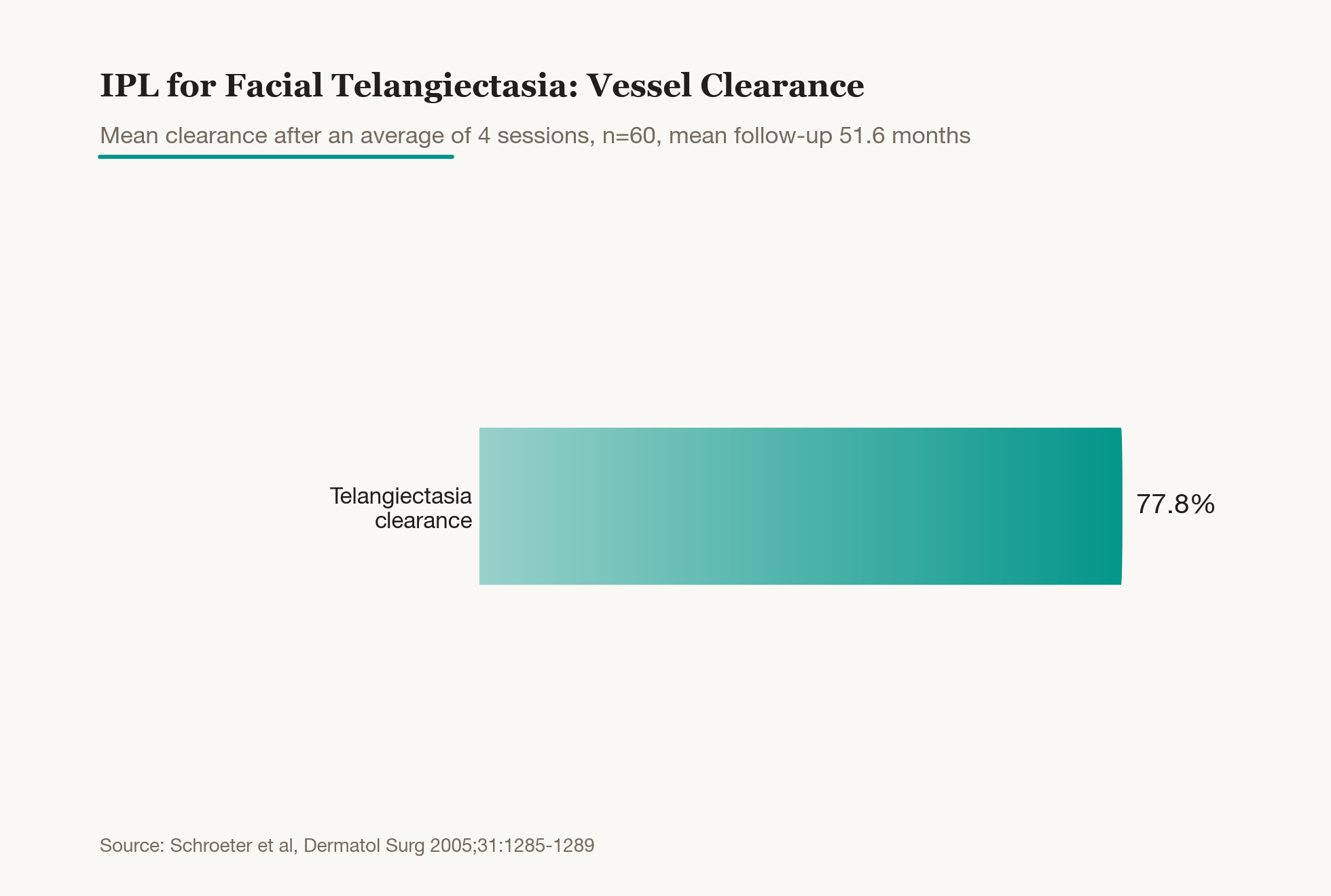
Melanin isn't confined to dark spots. It's spread fairly evenly through the epidermis, which is what gives skin its overall color. So if someone's baseline tone runs deeper, or they've had recent sun exposure, the light doesn't land only on the spots, it also gets absorbed across the whole epidermis.
A darker background makes it much harder to hit the intended target cleanly. That creates two problems at once: less energy actually reaches the spot itself, and the epidermis as a whole takes on more heat than it should, raising the risk of burns or even a worsening of pigmentation instead of an improvement.
This is exactly why clinics check skin tone before treatment and ask about recent tanning or sun exposure. The paler the skin and the less recent the UV exposure, the less background noise there is from epidermal melanin, which means the energy lands more precisely on the actual target, the spot or the vessel.
How filter numbers change the target
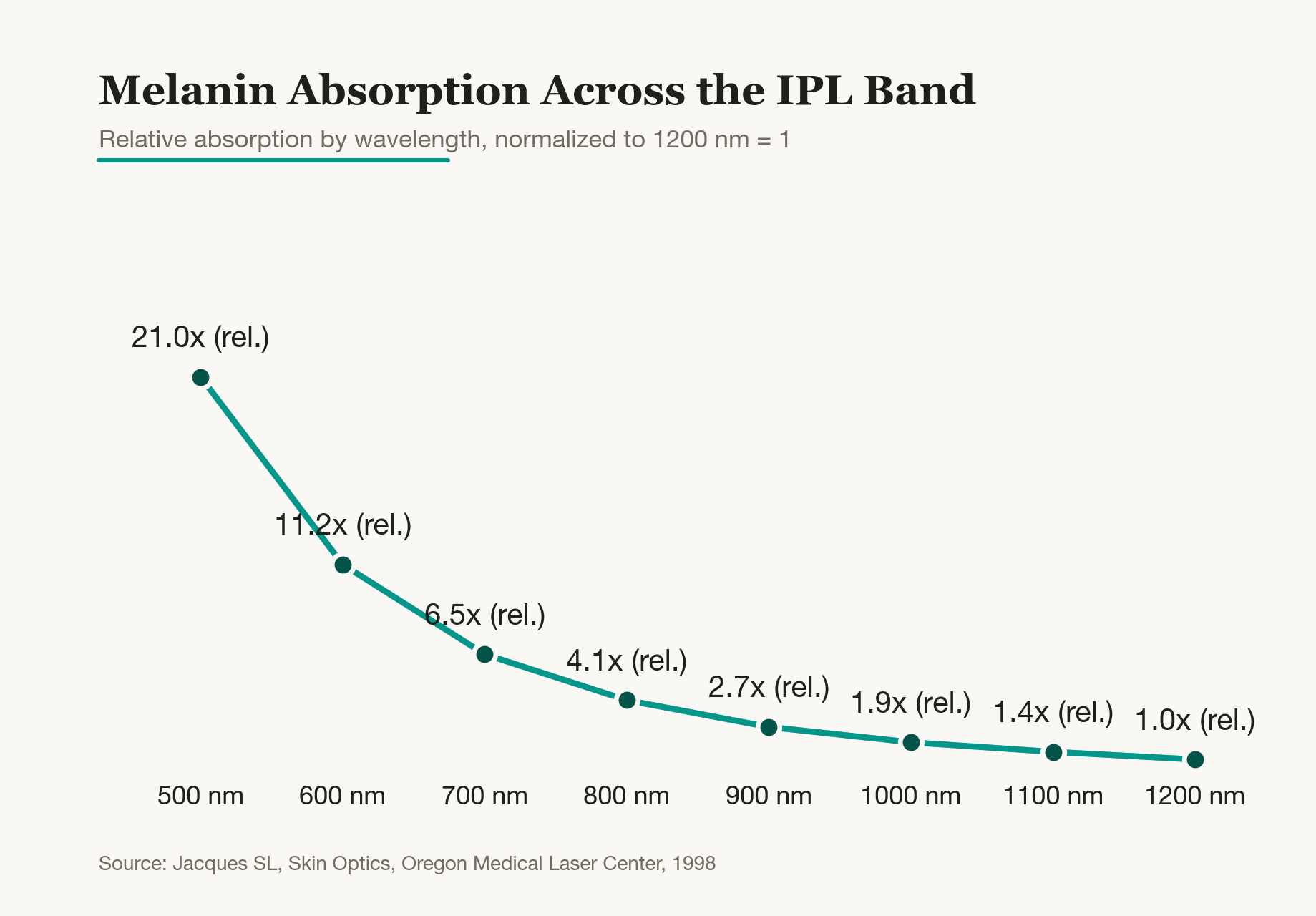
As mentioned earlier, IPL fires a broad band of light between roughly 500 and 1200 nanometers. Within that range, the shorter wavelengths are absorbed especially heavily by epidermal melanin. That's why IPL devices come fitted with a filter that blocks out everything below a certain cutoff, essentially a gatekeeper for the shortest wavelengths.
Set the filter to a lower cutoff and only the very shortest light gets blocked, leaving most of the band intact, which pulls the response more toward melanin. Push the cutoff higher and more of the short wavelengths get filtered out, shifting the balance toward hemoglobin instead.
This is also why the filter setting gets adjusted for thin or sensitive areas, or for spots with especially heavy pigment, it's a direct dial on how strong the stimulus feels. So with the very same machine, simply swapping the filter decides whether a session leans toward treating spots or toward treating redness.
Differences between IPL and laser
Both are light-based treatments, but IPL and lasers work in clearly different ways.
- The breadth of wavelength differs. A laser fires a single wavelength, IPL fires a broad band. That lets a laser concentrate with more precision on one target, while IPL can spread its energy across several targets at once.
- The scope of what each can treat differs. Lasers often need a different machine for each goal, one for pigment, another for vessels, while IPL can shift between wavelength ranges just by swapping filters, which is why a single IPL session ends up covering several concerns together.
- The character of the stimulus differs. A laser's single wavelength tends to concentrate energy at one point, so it can deliver a stronger, more targeted hit area by area. IPL spreads its energy across multiple wavelengths instead, so each session tends to feel gentler, with improvement drawn out gradually across several visits.
When do pore improvements show?
One reason pores look enlarged is that the skin around them has lost some elasticity, and the collagen underneath, the fibrous protein that acts like a support beam holding skin up, has weakened. When IPL's heat reaches gently down into the dermis, it's understood to stimulate fibroblasts, the cells responsible for making collagen, prompting them to ramp up production.
As collagen builds back up and the tissue becomes a little denser, the skin around each pore tightens, which can make pores look comparatively smaller. Unlike the melanin or hemoglobin response, though, this change isn't immediate. Since newly made collagen takes time to form, the shift is reported to appear gradually over 4 to 12 weeks after treatment.
Why isn't one session enough?
Not every bit of pigment and every vessel responds in a single visit. There are three reasons for that.
- Pigment and vessels sit at different depths and come in different sizes. The ones closest to the surface respond first, while deeper or thicker ones need 3 to 5 sessions of accumulated heat exposure before a response shows.
- Treatment is kept within a safe energy range. Firing too much energy in a single pass raises the risk of burns or pigmentation complications, so spreading it across repeated sessions at a safer intensity is the generally recommended approach.
- Some responses, like collagen regeneration, simply need time. Improvement in pores and skin texture isn't immediate, it builds gradually with cumulative stimulation, which is why a course of 3 to 5 sessions spaced 3 to 4 weeks apart tends to be the natural rhythm.
Sun protection afterward is considered especially important. Right after treatment, the skin's melanin-producing response is in a heightened, sensitive state, and heavy UV exposure during this window raises concern that pigmentation could come back even darker than before.
References
Korean Dermatological Association, Ministry of Food and Drug Safety (MFDS), American Academy of Dermatology (AAD), and U.S. Food and Drug Administration (FDA). </content> </invoke>
Was this helpful?
About this article
Written by a practising aesthetic physician and intended for general education — not a substitute for individual medical advice.
Read next
Nevus of Ota Treatment: Q-Switched Laser Sessions and Intervals
Nevus of Ota sits deep in the dermis rather than on the skin's surface, which is exactly why no amount of concealer can hide it. Here is a mechanism-focused look at why only a laser with a specific wavelength can reach that depth, and why treatment is spread across 6 to 10 sessions at 6 to 8 week intervals instead of being done all at once.
By Dr. Lee
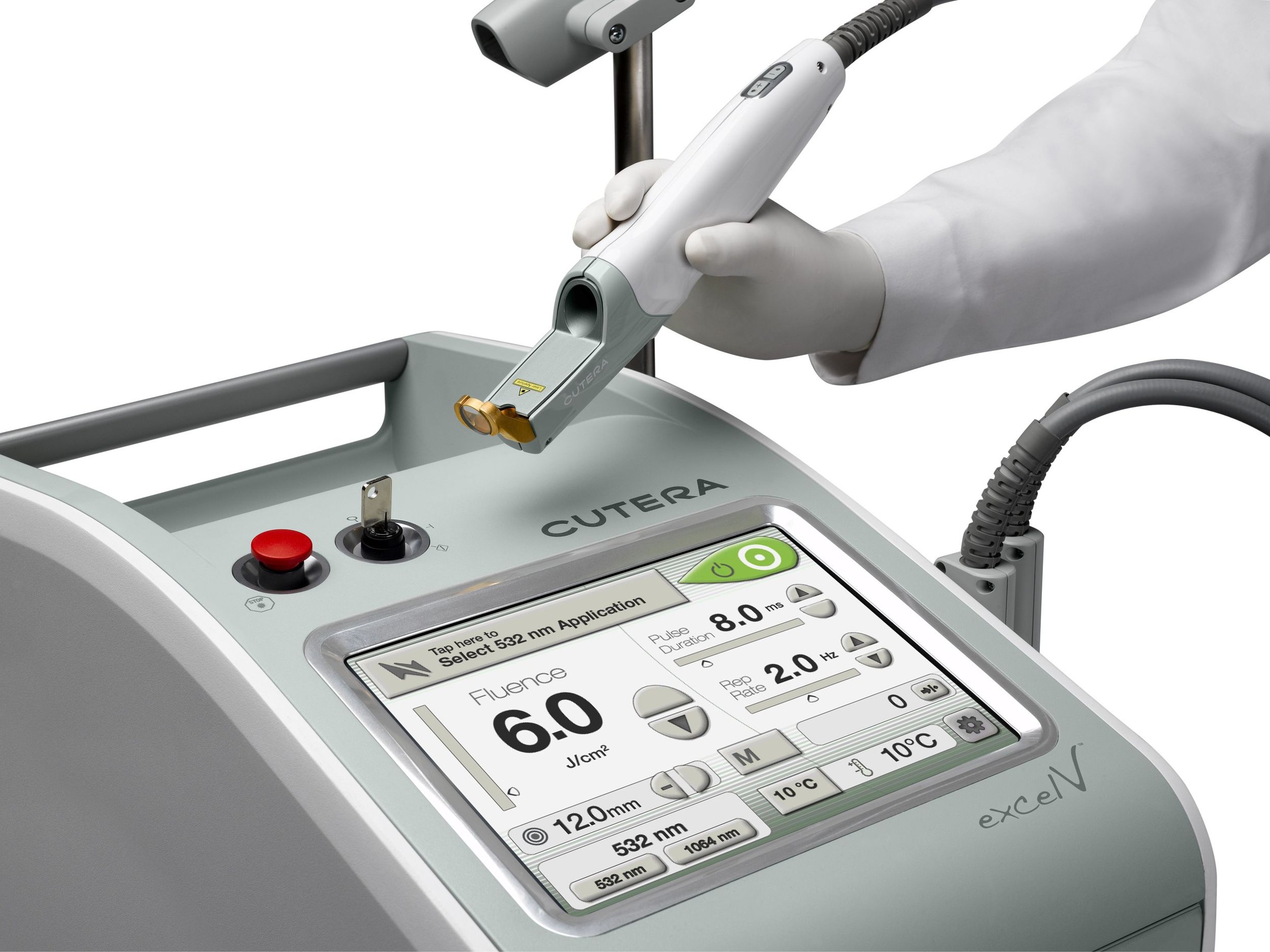
Excel V Laser for Redness and Dark Spots, Including Sessions and Downtime
The Excel V laser uses two different wavelengths of light to target blood vessels and pigment separately in the same session. Here is why redness and brown spots can be treated by a single machine, explained through how the device actually works.
By Dr. Kim
IPL Versus Laser for Dark Spots and Redness: Differences and Effects Compared
IPL is a device that uses a broad band of light to treat dark spots, redness, and fine hair all in one session. For clearly defined spots or deep pigment, pico and toning lasers have taken the lead. But for redness, rosacea, photoaging, and hair removal, the concerns that overlap on one face, IPL still holds up well.
By Dr. Lee