Hypertrophic Scars Versus Keloids: Differences and Treatment Compared
By Dr. Kim8 min read
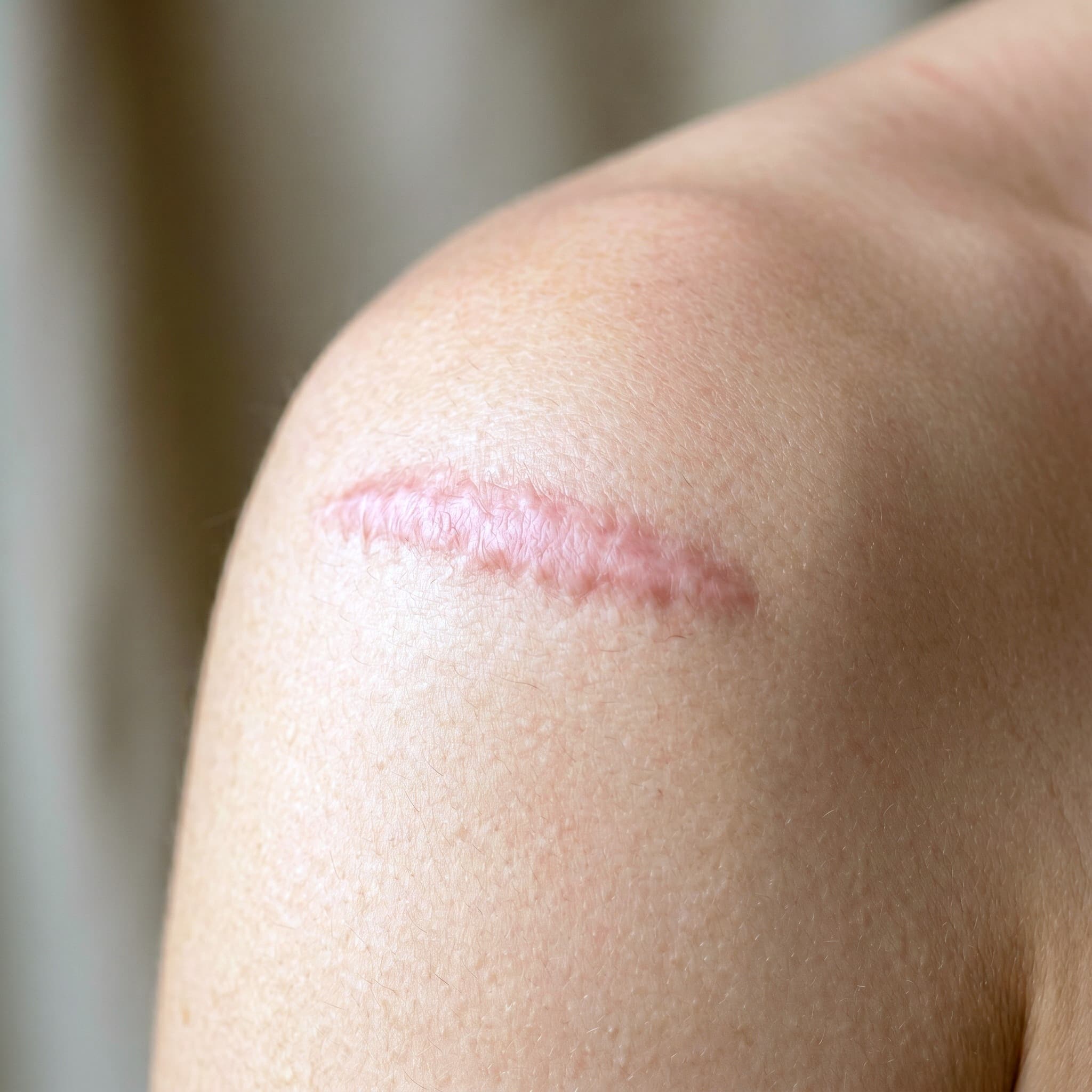
A lot of people end up with a red, raised scar after surgery or a burn, and it's a common source of worry. It feels firm to the touch, and sometimes itches or pulls. This is called a hypertrophic scar. Many people mistake it for a keloid and panic, but the two are actually quite different in behavior. A hypertrophic scar stays within the boundaries of the original wound, and in many cases, it flattens out on its own over time. That said, managing it early still gets better results than just waiting it out. Below is a walkthrough of why hypertrophic scars form, how to tell them apart from keloids, and what you can do at home versus what a clinic can offer. If a scar has been weighing on your mind, this should help you get your bearings.
Why does a hypertrophic scar become red and thick?
When a wound heals, the body produces collagen to fill in the gap. Normally, it makes just enough and then stops. But when that process goes off track, more collagen gets produced than gets broken down. As the excess builds up, the scar rises and turns red. That's a hypertrophic scar, similar to applying too much cement over a wall and ending up with a lumpy, uneven surface.
Two things mainly trigger this. One is prolonged inflammation during healing. The other is tension, meaning the pulling force the skin is under. That's why hypertrophic scars commonly form after burns, surgical incisions, severe acne, piercings, or trauma. They show up especially often on areas under constant tension, like the sternum in the center of the chest, the shoulders, and joints. Every time you bend and straighten your arm, the scar there gets pulled, which encourages even more collagen to build up. Hypertrophic scars from burns typically start rising around 2 months after the injury, which is why how you manage the first few months of healing matters so much. That said, not every wound turns out this way. Wounds under less tension, or shallow ones, usually heal flat. In the end, the depth and location of the wound, along with the stress it's under while healing, largely determine the scar's fate.
How is a keloid different from a hypertrophic scar?
| Hypertrophic scar | Keloid | |
|---|---|---|
| Border | Stays within the wound | Spreads beyond the wound |
| Natural course | Flattens on its own in 1-2 years | Rarely resolves |
| Recurrence (after excision) | Low | 45-100% |
| Family history | Weak link | Strong link |
The easiest way to tell them apart is to look at the border. A hypertrophic scar stays neatly within the original wound and, over time, often flattens gradually. A keloid, on the other hand, spreads out beyond the original wound like crab legs reaching sideways. What starts as a small spot can, months later, invade perfectly healthy skin around it. It rarely disappears on its own, either. Cutting it out often just brings it back, with reported recurrence rates after excision ranging from 45% to 100% (StatPearls).
Family history offers another clue. Keloids often run in families, while that link is much weaker for hypertrophic scars. So just checking whether a scar is spreading beyond the wound and whether it's flattening over time gives you a rough sense of direction. That said, if the border looks unclear or the scar seems to keep growing, it's safer to get it checked by a doctor rather than guess on your own, since the two require entirely different treatment approaches.
Does a hypertrophic scar flatten on its own?
| Timeline | Scar changes |
|---|---|
| Early | Red, firm, raised |
| 6 months to 1 year | Redness fades |
| 1-2 years | Flattens, color lightens |
In many cases, yes. Hypertrophic scars mature over time and gradually flatten. In patients under 55, one report found the average maturation time was about 22.5 months, which is nearly two years. A scar that started out red and firm gradually lightens in color and thins out over that stretch. What once felt raised under your fingertips slowly comes closer to skin level. A shift from red to apricot or light brown is also a sign of maturing.
Not every scar follows this path, though. Scars on areas under constant tension, like the sternum or shoulders, along with large burn scars, tend to mature more slowly and take longer. Itching or a pulling sensation can show up along the way, too. Plenty of people end up scratching an itchy scar at night and re-irritating it in the process. Scars over joints are worth watching especially closely, since stiffening there can pull on movement and lead to contracture, so it's worth managing those more aggressively from the start. That's why, instead of just waiting around hoping it'll disappear eventually, starting simple care like silicone or pressure therapy early tends to produce a better outcome. It helps to hold both facts in mind at once: scars often improve on their own, and management still helps.
Silicone and compression care at home
The first thing to reach for at home is silicone. Silicone gel or sheets cover the scar, lock in moisture, and seal the surface, similar to putting a thin moisturizing film over dry skin. In studies where it was used for prevention, it lowered the risk of scarring by an RR of 0.70, roughly a 30% reduction. Since it's just something you apply, side effects are minimal, which is why it's widely used as a first-line treatment. Generally, you need at least 12 hours a day for a minimum of 2 to 3 months before the benefits really add up. For burn scars, pressure therapy gets added on top. Wearing a pressure garment at around 15 to 25mmHg for at least 12 months helps reduce the raised thickness.
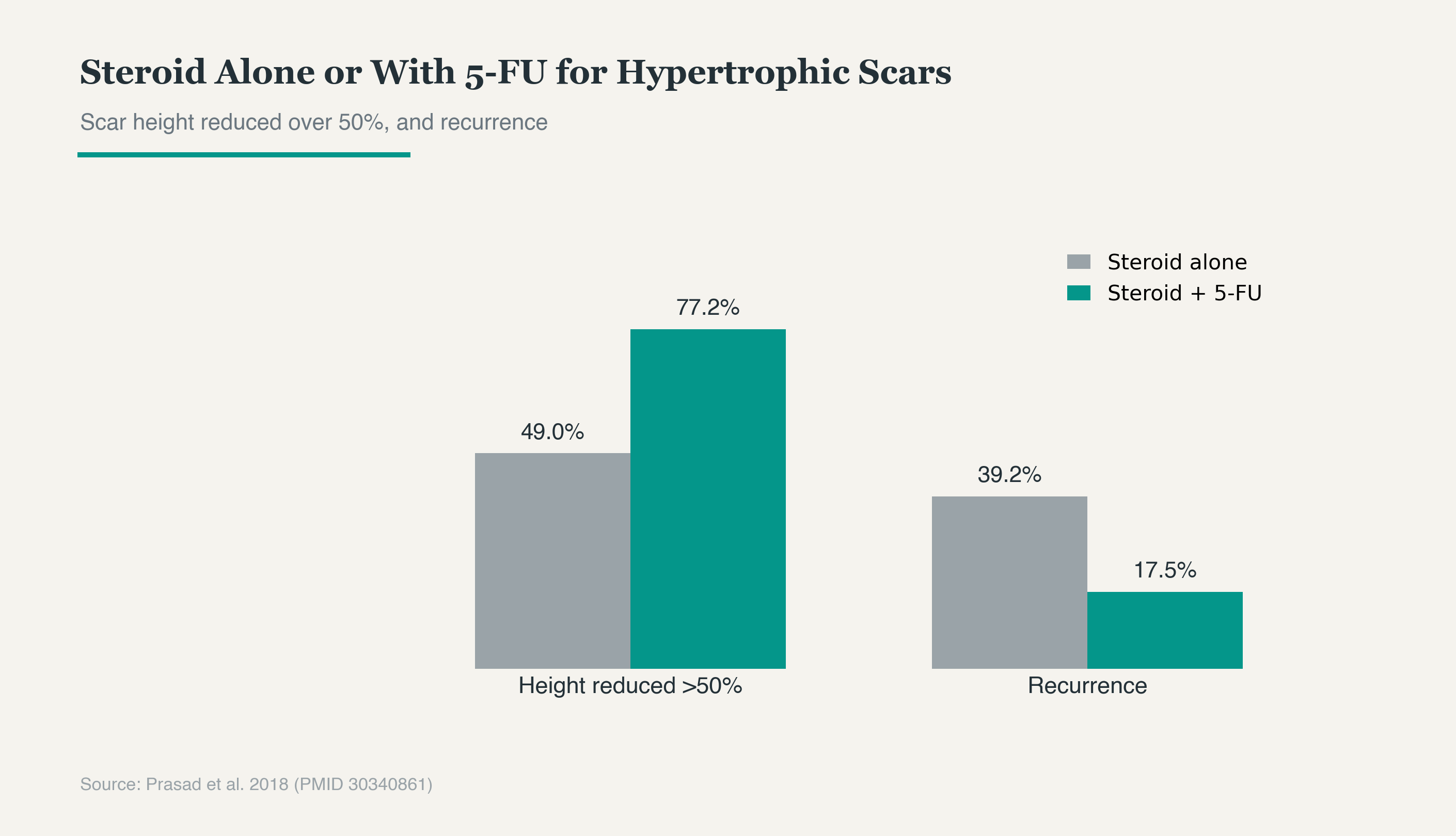
That covers the basics you can do at home. But if a scar is thick and firm enough that silicone and pressure alone aren't cutting it, treatment moves into the clinic. The graph above bridges that gap. With intralesional steroid injection alone, 49% of patients saw their scar height drop by more than half. Adding 5-FU on top raised that to 77.2%, and recurrence dropped from 39.2% to 17.5% (Prasad 2018). So if you're dealing with a stubborn scar, injection treatment, covered in the next section, is the natural next step.
Injections and laser for thick scars
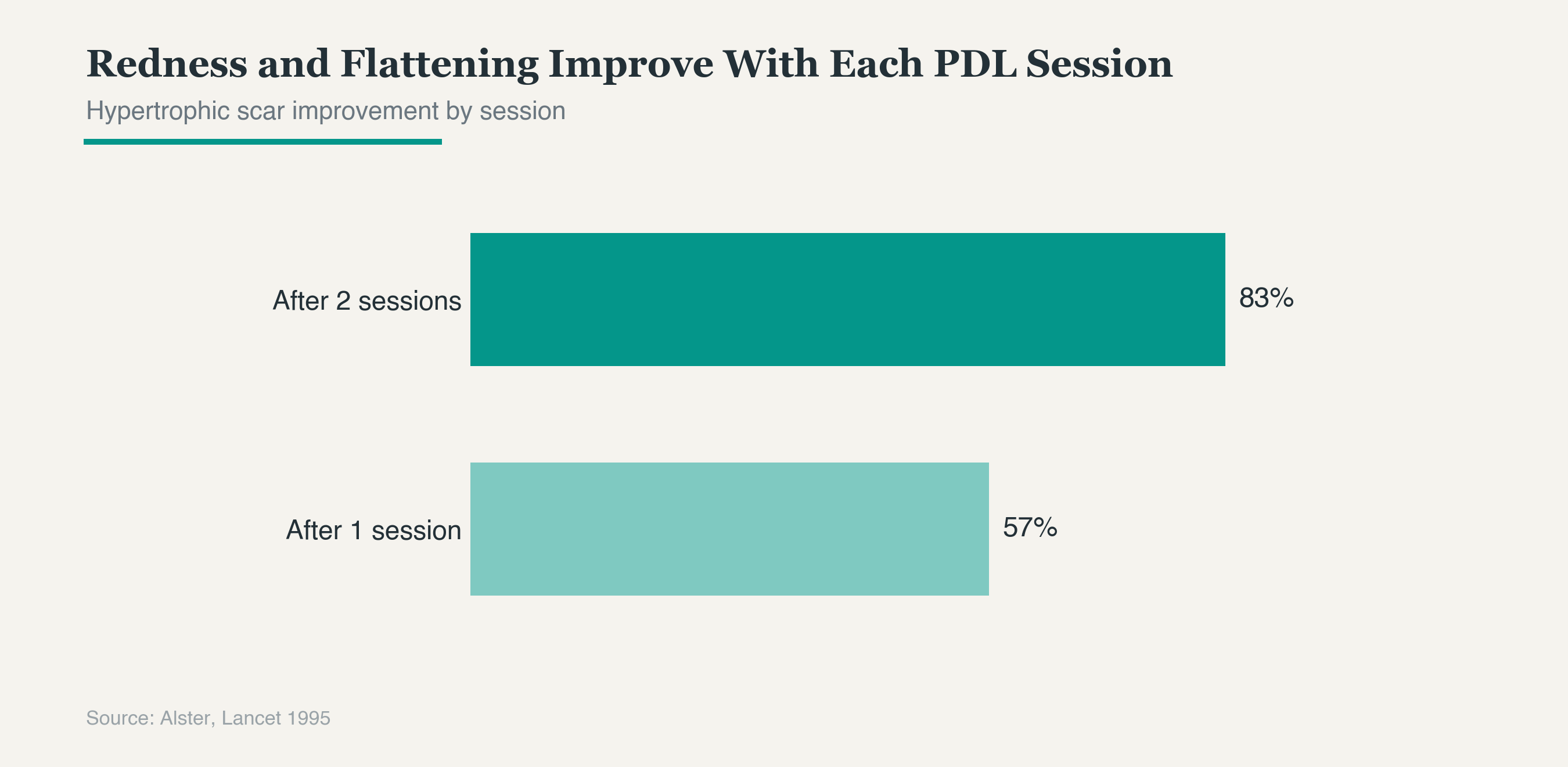
The core clinical treatment for a raised scar is intralesional steroid injection. Triamcinolone is injected directly into the scar to suppress collagen. Adding 5-FU on top, as the graph above shows, boosts the effect further and cuts down on recurrence. This is usually done as a series of injections spaced a few weeks apart. For scars with prominent redness, pulsed dye laser (PDL) works well. In one study, a single PDL session improved redness and flatness by about 57%, and a second session pushed that up to about 83% (Alster 1995). Redness and thickness both continued to improve with each additional round.
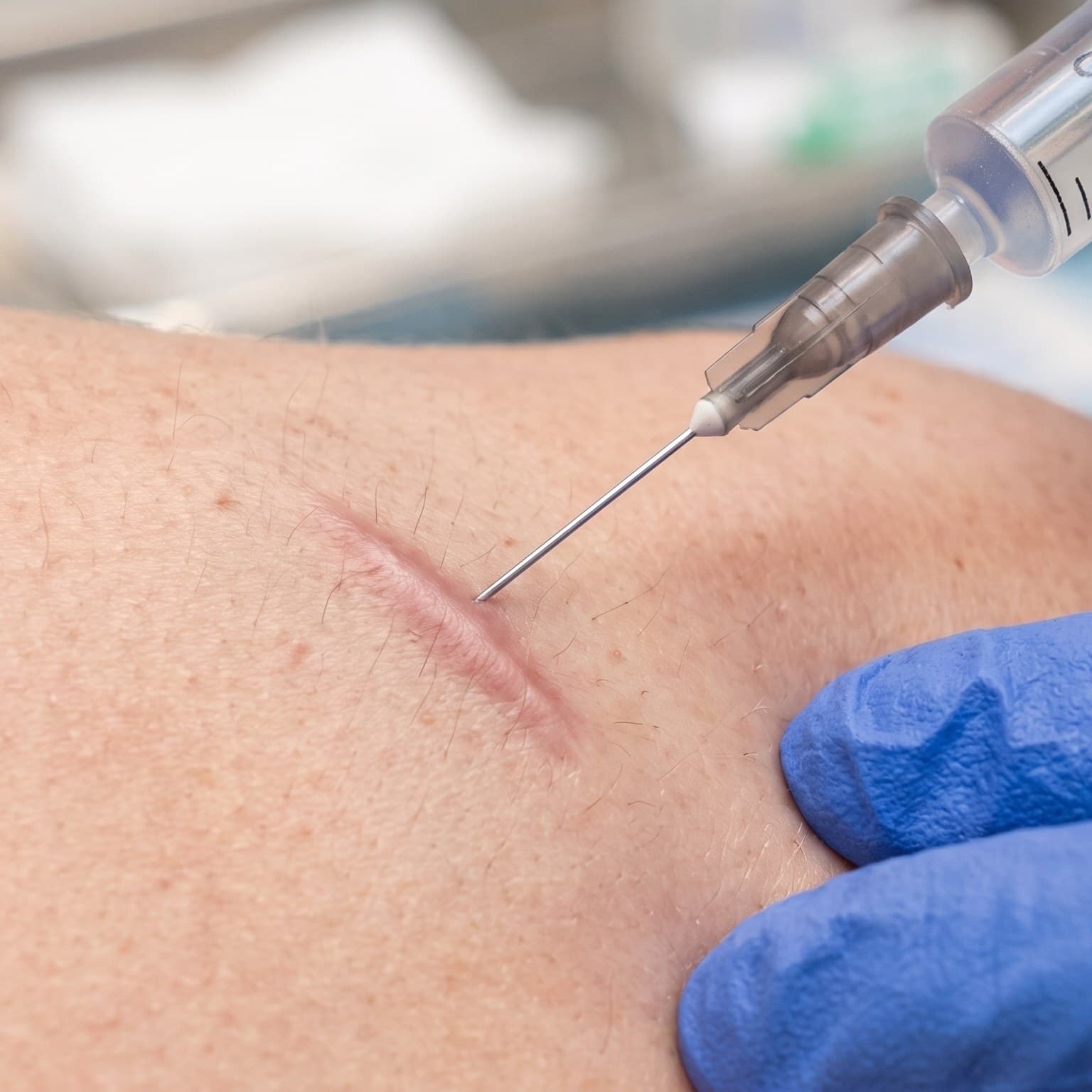
There are other options too. Fractional laser can refine both the texture and color of the scar together. Microneedling uses very fine needles to create micro-injuries that realign collagen and smooth the surface. Since hypertrophic scars recur less often than keloids, surgical revision is a reasonable option in appropriate cases, ideally paired with tension-relieving suture techniques. In practice, clinicians often combine two or three approaches rather than relying on just one, pairing injections with laser treatment, for example. The right combination depends on the scar's location, thickness, and color, which is something to work out with a doctor.
How to prevent scarring
| Timing | Care |
|---|---|
| At closure | Tension-minimizing sutures, taping |
| After the wound closes | Early silicone gel and sheets (from 2-3 weeks) |
| During the immature phase | Sun protection |
| Ongoing | Avoid picking at scabs or wounds |
It's much easier to keep a scar from forming in the first place than to fix one after the fact. It starts with reducing tension. Paying attention to suturing technique and taping so the wound is pulled on less reduces the force that pushes a scar to become raised. Once the wound closes, applying silicone gel or sheets early, starting around 2 to 3 weeks in, helps. Early silicone use is the best-supported prevention method available, essentially pressing the scar down before it has a chance to settle in.
Sun protection matters too. When a still-red, immature scar gets exposed to sunlight, both pigmentation and redness tend to deepen. Good sun protection alone can keep a scar much less noticeable down the line. Picking at scabs or a healing wound reignites inflammation and makes the scar bigger, so it's worth resisting that habit. High-risk areas like the sternum and shoulders, along with burns, are safer when pressure therapy is added from the start. The first few months of care shape how the scar ultimately looks, so putting in a bit of diligence while the wound is still red saves you a lot of regret later.
Was this helpful?
About this article
Written by a practising aesthetic physician and intended for general education — not a substitute for individual medical advice.
Read next

Keloid Scar Treatment Effects and Recurrence Rate, From Steroid Injections to Surgery
How keloids differ from hypertrophic scars, why keloids form from collagen overgrowth, how much combining steroid injections with 5-FU cuts recurrence, what silicone, compression, laser, and cryotherapy each do best, and why surgery should never be used alone, all explained with real study numbers.
By Dr. Kim

Keloid Scar Causes and Treatment, Including Recurrence and Management
A keloid is a scar that keeps piling up collagen even after the wound has fully healed, growing larger than the injury that started it. Here's why the collagen never seems to know when to stop, how a keloid differs from an ordinary scar, how injections and laser treatments work to calm it down, and why it tends to come back so often.
By Dr. Lee

Flat Wart Causes and Symptoms: Why They Spread When Squeezed, and Treatment
Flat warts are a viral skin condition, so picking or scratching at them doesn't clear them up, it spreads them further. Here's why that happens, how to tell them apart from moles or acne, and the logic behind removal and preventing recurrence.
By Dr. Kim