Filler Migration and Lumps: Causes, Under-Eye and Lip Differences, and Prevention
By Dr. Lee7 min read
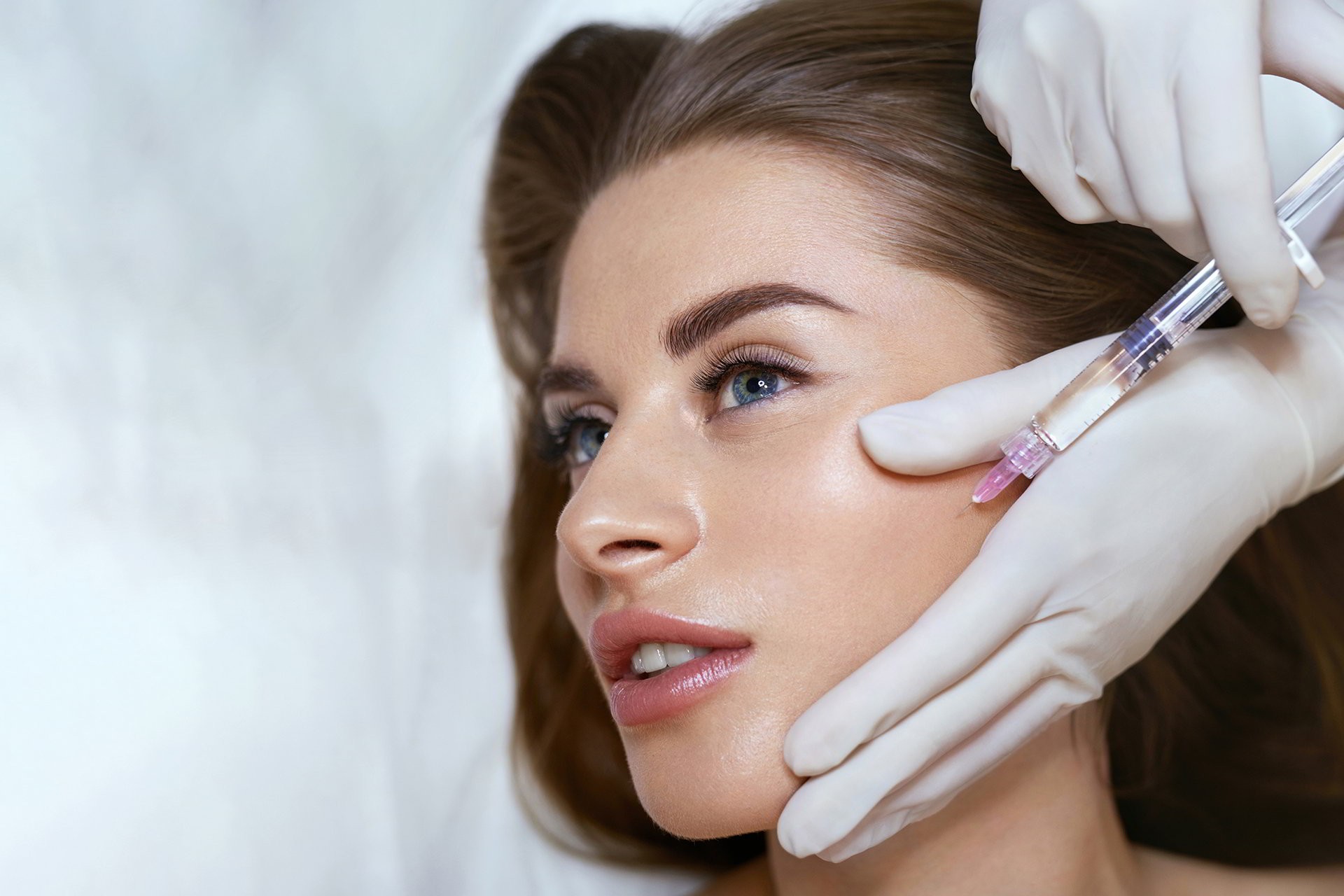
It is easy to assume that filler stays exactly where it was injected, holding its original shape forever. In reality, filler can drift slightly from its original spot over time, or feel like it has bunched up on one side when you touch it. This kind of change is usually called migration or clumping.
A few physical factors work together to cause filler to migrate and clump. The properties of the product itself, the movement of the area it was injected into, and how the area is cared for afterward all overlap to produce this effect. Here is a look at why it happens, area by area, along with how to prevent it.
Why does filler move around in the face?
The tissue under facial skin is not a fixed wall. It is a soft structure that slides between fat and fascia. When filler is injected, it does not lodge in place like a nail. Instead, it settles into a texture similar to the surrounding tissue. That means every time you smile, chew, or make an expression, the filler gets pressed and nudged along with everything around it.
On top of that, hyaluronic acid (HA) filler attracts water. Like a sponge soaking up moisture, it draws in surrounding fluid and expands in volume. As it expands, the filler can be pushed toward areas of lower pressure nearby. If there is a direction with lower pressure than the original injection site, the filler tends to drift slowly that way over time.
How cohesivity and injection depth affect migration
How easily a filler migrates depends on its viscosity and cohesivity. A product with low cohesivity has particles that do not hold onto each other very tightly, so it spreads easily in the direction of pressure, much like a wet dough. A product with high cohesivity, on the other hand, holds its shape more firmly and resists spreading even under pressure. That is why areas that move thousands of times a day, like the lips, are generally treated with a high cohesivity product to help limit migration.
Injection depth matters too. Placing filler in a shallow layer just under the skin exposes it directly to surface movement, giving it more room to shift. Placing it in a deeper layer beneath the fascia settles it into a relatively stable plane where it moves less. This is why the same amount of filler can migrate to a different degree depending on how deep it was placed.
Why do lumps form?
Clumping happens for somewhat different reasons than migration. If a lump is noticeable right after treatment, it is likely because a large amount of filler was concentrated at a single point rather than distributed across several smaller injection points. Injecting a large volume into one spot instead of spreading small amounts across multiple points can leave that area raised and feeling like a small nodule under the fingers.
New clumps can also appear well after the initial treatment. Because the body recognizes filler as a foreign substance rather than something that was already there, it responds by wrapping a thin layer of fibrous tissue around it. This response is usually mild enough to go unnoticed, but it has been reported to become more pronounced, and feel like a lump, during periods when the immune system is more active, such as with a cold, dental work, or a vaccination. Infection or a biofilm, a thin layer that bacteria form on a surface, can also cause clumping, so if a lump is red, swollen, or painful, the possibility of infection should be considered as well.
Why do the under-eyes and lips spread so easily?
How much filler migrates depends heavily on the area. The under eye region, or tear trough, has thin skin and tissue that moves constantly with every blink, so migration tends to be more noticeable there than elsewhere. This area is also affected by gravity, which can cause filler to gradually shift downward or outward as time passes.
The lips are another area prone to migration. The muscles around the mouth contract and relax strongly every time you speak, eat, or make an expression, so a low cohesivity product can get pushed upward toward the philtrum above the upper lip, leading to swelling or a lumpy appearance. The nose and nasolabial folds have relatively thick, less mobile tissue, but overfilling or shallow placement in these areas can still cause the filler to spread sideways.
How to reduce migration during injection
Migration and clumping can largely be reduced through how the treatment itself is performed. The following approaches are commonly used together.
- Choosing the right product for the area: Areas that move a lot, like the lips, benefit from a high cohesivity product, while relatively stable areas can use a softer one. This helps because cohesivity determines how well the filler withstands the area's natural movement.
- Staying at the correct injection depth: Placing filler precisely into an anatomically stable layer reduces its exposure to tissue movement. The shallower it is placed, the more directly it inherits movement from the skin surface, making migration more likely.
- Injecting small amounts across multiple points: Spreading small volumes across several points rather than concentrating a large amount at one spot lowers the pressure at each site. Lower pressure means less force pushing the filler sideways.
- Avoiding overcorrection: Injecting more than necessary raises the pressure inside the tissue, which increases the force driving the filler toward areas of lower pressure. Sticking to the appropriate amount is considered one of the most basic ways to prevent migration.
How should you care for the first few days after treatment?
Aftercare also plays a major role in migration and clumping, since filler is especially vulnerable to outside forces before it fully settles into the tissue.
- Avoiding heat for the first few days: Spending time in a sauna or a hot bath can cause tissue to swell and loosen, making filler that has not yet settled easier to displace. Long, hot showers carry the same risk early on, so it is best to be cautious.
- Avoiding hard pressure or rubbing: Areas that face repeated pressure, like the bridge of the nose where glasses rest, or the cheek pressed against a pillow when sleeping face down, can gradually push filler toward the side with less pressure.
- Paying brief attention to sleep position: Simply avoiding sleeping face down or on one side for a long stretch in the first few days is said to help, since it reduces sustained pressure on one side of the face.
- Postponing intense exercise for a few days: Vigorous exercise that raises body temperature and causes heavy sweating can swell tissue in a way similar to heat exposure, so it is recommended to keep intensity lower in the early period.
Can it be dissolved if it has already spread?
Filler that has already migrated or clumped can often be reversed, though how well this works depends on the type of filler.
Hyaluronic acid (HA) filler can be dissolved with an enzyme called hyaluronidase. This enzyme breaks HA down into smaller pieces so the body can absorb it naturally. Injecting this enzyme precisely into the migrated or clumped area is said to allow the problem spot to be selectively removed.
Non HA fillers such as PLLA or CaHA, on the other hand, do not dissolve with this enzyme. For these, the options are waiting for the body to break the material down on its own, or considering a small procedure to remove it physically if needed. This is one reason HA filler is often the first choice for areas with a relatively higher risk of migration or clumping, since it is easier to reverse.
References
Korean Dermatological Association, American Academy of Dermatology (AAD), and Ministry of Food and Drug Safety (MFDS).
Was this helpful?
About this article
Written by a practising aesthetic physician and intended for general education — not a substitute for individual medical advice.
Read next

Tyndall Effect From Under-Eye Filler: Causes of the Blue Cast and How to Fix It
Some people notice a bluish tint under their eyes at certain angles after getting filler. This happens because of the Tyndall effect, light scattering off filler particles. Here is why it shows up so often under the eyes, and how to prevent or reverse it.
By Dr. Kim
Filler Aftercare: Managing Swelling and Bruising, and How Long It Lasts
After filler injections, your skin needs time for swelling and bruising to settle and for the product to find its place in the tissue. How you handle heat, pressure, and sun exposure during this window can affect both your results and how quickly you heal. Here is a stage-by-stage guide to the aftercare that actually matters.
By Dr. Kim

Samurai Brows After Forehead Botox: Causes, Correction and Prevention
After forehead Botox, the outer tips of the eyebrows can shoot up on their own, giving an angry look known as Spock brow or samurai brow. Here's the muscle mechanics behind why it happens, how a small touch-up dose corrects it, and how treating the glabella at the same time helps prevent it, based on real clinical research.
By Dr. Lee