PLLA, PCL and CaHA Collagen Stimulators: Differences and Duration Compared
By Dr. Lee7 min read
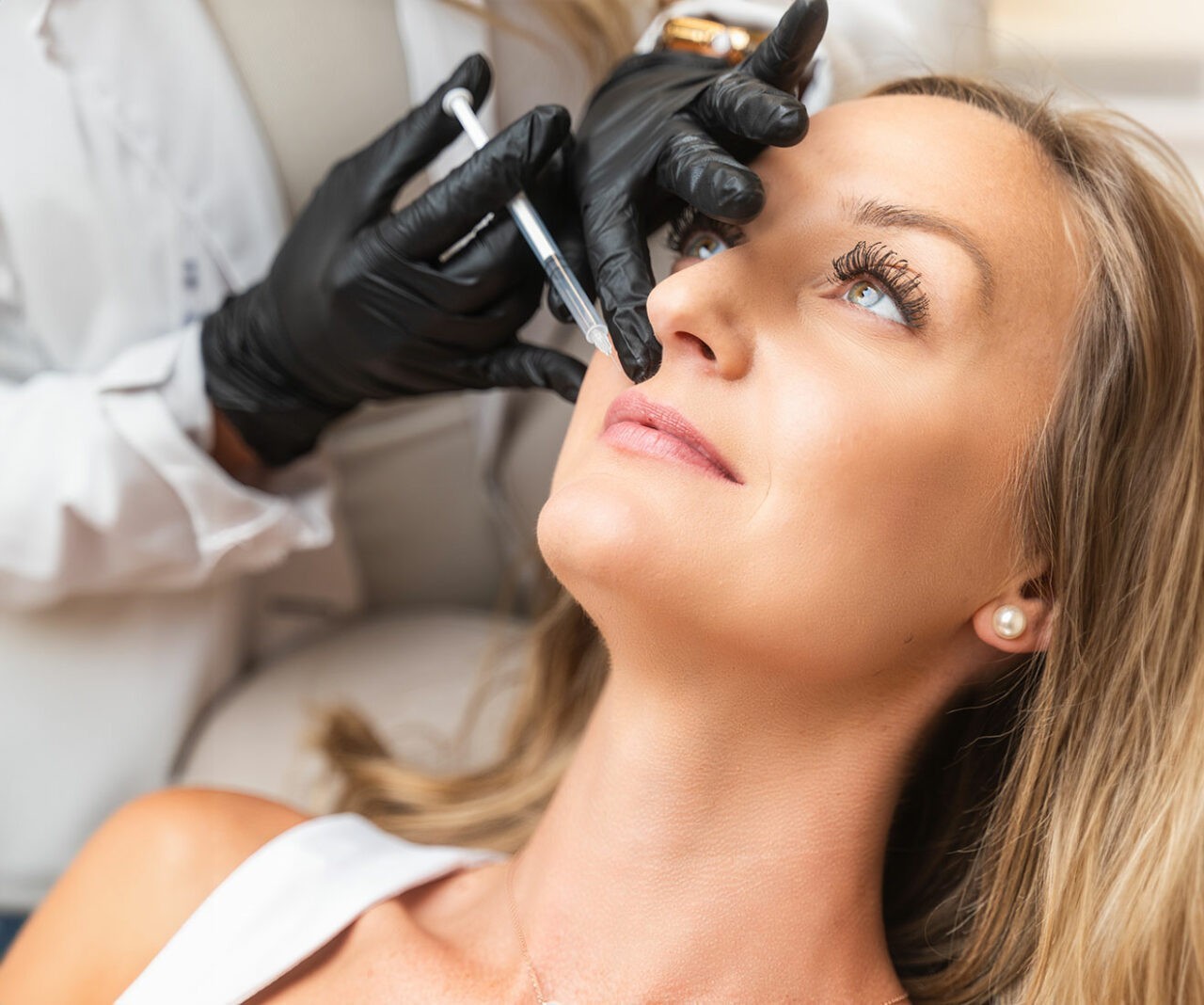
Plenty of treatments get grouped under the label collagen stimulator. There are three main ingredients, PLLA (poly-L-lactic acid), PCL (polycaprolactone), and CaHA (calcium hydroxylapatite), and by name alone they can sound interchangeable. In practice, though, they work quite differently once they are in the skin.
Even though they share the same broad category, they differ in how fast results appear, whether there is any immediate volume, and how long the effect actually lasts. Let's walk through where those differences come from.
How do fillers and collagen stimulators differ?
A standard hyaluronic acid (HA) filler works by filling space directly, the gel itself creates the volume. Think of it like slipping a water-soaked sponge into a gap.
Collagen stimulators take a different route. Instead of the material itself filling out the volume, tiny particles are placed under the skin so the body recognizes them as a foreign substance and reacts to them. That reaction wakes up fibroblasts (the cells in the skin responsible for making collagen), and they start producing fresh collagen on their own. In other words, the volume comes from the body's own repair response, not from the injected material itself.
That is why collagen stimulators rarely deliver a finished look on the day of treatment. The body needs time to respond and build up new collagen.
Why doesn't PLLA show right after injection?
PLLA starts out as a freeze-dried powder of fine particles and gets mixed with water before the treatment. Once injected into the deeper layer of the skin, macrophages (immune cells that engulf and process foreign material) surround the particles, and in the process of clearing them, they recruit fibroblasts to start building new collagen.
The key point is that PLLA is not a gel, it is diluted particles suspended in water, so there is almost no visible volume right after the injection. It is a bit like planting a seed. The soil looks empty right after planting, but new tissue slowly grows in that spot over time.
That is also why PLLA is usually done in several sessions spread a few weeks apart rather than all at once. Spacing out the stimulation to match the pace at which collagen builds up is thought to produce a more even response.
In what order does PCL work?
PCL is made of tiny bead-shaped particles suspended in a gel carrier. Because the gel itself fills some volume right away, PCL often gives a visible result on the same day, unlike PLLA.
Over time the gel is gradually absorbed by the body and disappears, while the remaining PCL beads slowly break down where they sit, keeping the collagen stimulation going. It works a bit like laying bricks: at first the mortar (the gel) fills the gaps and holds the shape, and later the bricks (the PCL particles) themselves carry the structure for the long haul.
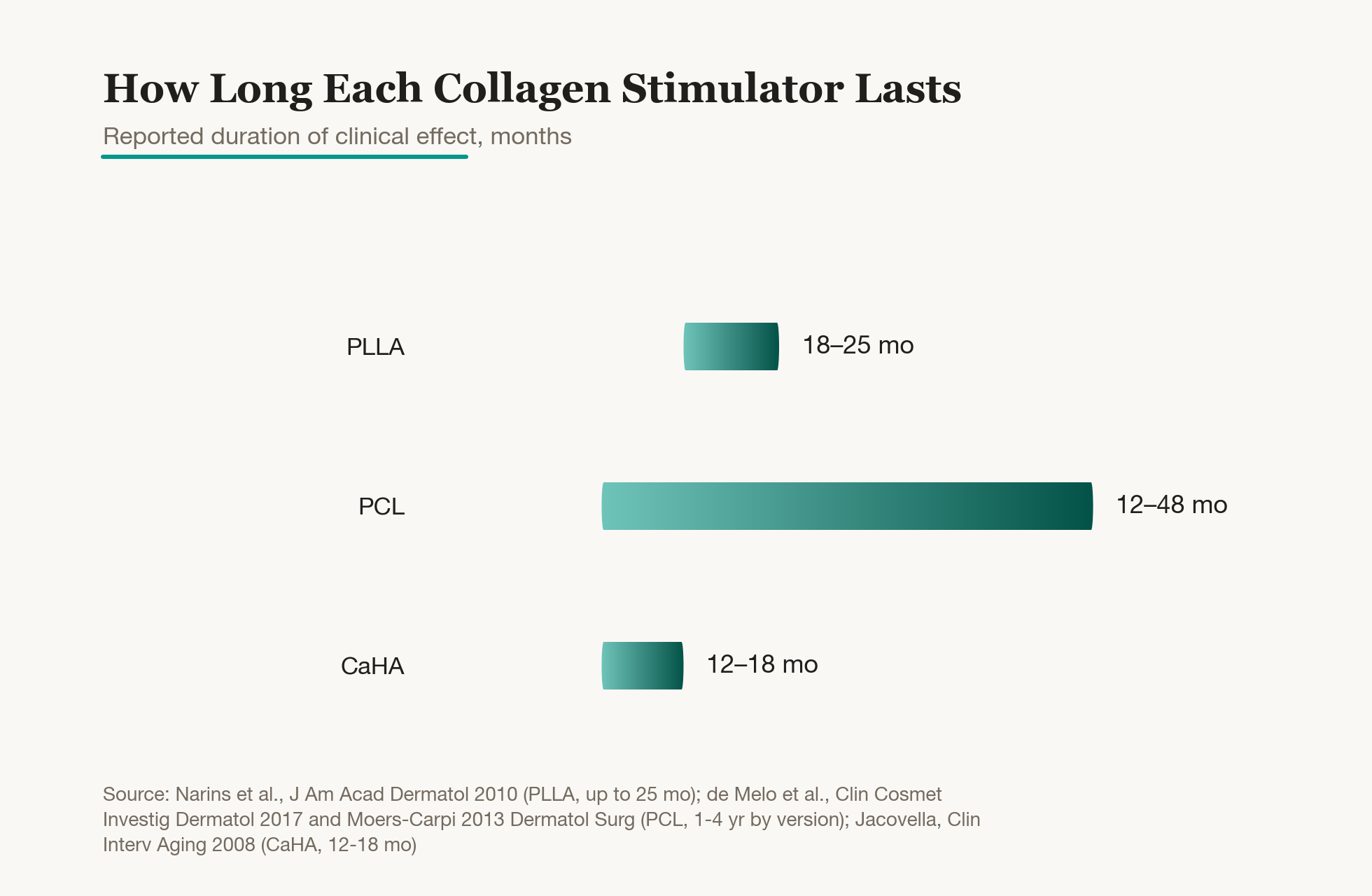
PCL tends to break down the slowest of the three ingredients. That is generally why its collagen stimulation is described as lasting the longest. The slower the particles disappear, the longer the surrounding repair response keeps going.
How does CaHA break down in the body?
CaHA is made from tiny beads of a calcium compound, the same family of mineral found in bone and teeth, suspended in a gel carrier. Like PCL, the gel provides immediate volume right after injection.
Once the gel is absorbed, the calcium beads remain behind and continue to trigger collagen production. Over time those particles slowly break down into calcium and phosphate, substances the body already has and recognizes. Because the body is not dealing with a completely foreign material, the response is often described as fairly predictable.
CaHA also tends to have a denser gel, which gives it good staying power once placed. That is one reason it is often chosen for areas where a defined, structural kind of volume is needed, such as the nose bridge or the chin. The gel itself holds its shape reasonably well.
When do you notice effects by ingredient?
The biggest difference among the three comes down to whether there is a gel carrier at all. PCL and CaHA work on a two-part system, the gel fills volume immediately while the particles trigger collagen later. PLLA, by contrast, has almost no volume-filling gel to begin with, so the outcome depends entirely on how fast collagen builds up.
That difference is very noticeable to the person getting the treatment. PCL and CaHA tend to show some change from day one, while PLLA results emerge gradually over several weeks. Neither approach is inherently better, they are simply tools suited to different timelines and goals.
What determines duration?
All three fall under the same collagen stimulator umbrella, but several factors together decide how long the results actually hold up.
- How fast the particles break down: The slower the particles degrade, the longer the collagen stimulation continues. As long as the body is still processing the particles, the repair response stays active.
- Injection site and depth: In areas with a lot of movement, such as around the mouth, muscle motion can make it harder for particles to stay in place. Areas with less movement are generally described as holding the stimulation more evenly over time.
- Number of sessions and volume: Spreading treatment across several sessions instead of injecting a large amount at once is often reported to build collagen more evenly. Repeated stimulation lets the response accumulate.
- Individual metabolism and skin condition: Age, the skin's own collagen-making capacity, and lifestyle habits can all cause the results to last for different lengths of time even with the same treatment.
Which ingredient is used where?
The three ingredients are less like interchangeable substitutes and more like tools with slightly different uses. For gradually raising overall collagen density across the face, a widely diluted, multi-session approach like PLLA is a common choice, since that structure suits an even response spread over a broad area.
For sculpting a specific area or seeing change from day one, PCL or CaHA, which both offer immediate volume, are often chosen instead. Because the gel carrier sets the shape right away, it is easier to check and adjust the desired contour on the spot.
Of course, which ingredient makes sense depends on the skin's condition, the desired outcome, and the judgment of the clinician performing the treatment. Understanding how each ingredient works simply makes it easier to ask more specific questions during a consultation.
Aftercare following treatment
Since each ingredient behaves differently in the body, aftercare also varies a little from one to the next.
PLLA is thought to need the particles to spread evenly rather than clump together for a natural-looking response, so massage is often recommended for a period right after treatment. If particles gather in one spot, the reaction can end up concentrated there instead of spreading out.
PCL and CaHA rely on a gel that already holds its shape, so massage tends to play a smaller role. That said, avoiding heat and strong pressure right after treatment is commonly recommended across all three ingredients, since heat or pressure can shift a gel or particles that have not yet settled into place.
Swelling and bruising typically fade on their own over time, though recovery speed varies from person to person.
References
Korean Dermatological Association, American Academy of Dermatology (AAD), and Ministry of Food and Drug Safety (MFDS).
Was this helpful?
About this article
Written by a practising aesthetic physician and intended for general education — not a substitute for individual medical advice.
Read next

Skinaura Booster: Effect, Duration and Aftercare
Skinaura Booster combines a hydrating ingredient with a cell-stimulating one to smooth out skin texture. Here is why texture roughens in the first place, which ingredients reverse it and how, plus what determines how long results last and how to care for your skin afterward.
By Dr. Kim
MGF Baby Injection: How It Works, Results, and the Role of Growth Factors
The 'baby injection' treatment uses microneedling to deliver growth factors into the skin and support collagen production. One of those growth factors, MGF, is a substance the body naturally produces when tissue is damaged, carrying regeneration signals to cells. Here is how it works in the skin and how it differs from the other growth factors used alongside it.
By Dr. Lee

Recessed Chin Filler and Implant: Differences, Duration and Recovery Compared
Filler and implants both correct a recessed chin, but they build volume through different mechanisms, last for different lengths of time, and differ in whether the result can be reversed. Here is how each one works, what recovery looks like, and how to decide which fits you.
By Dr. Kim