Chest Acne: Causes and How It Differs From Facial Acne
By Dr. Lee7 min read
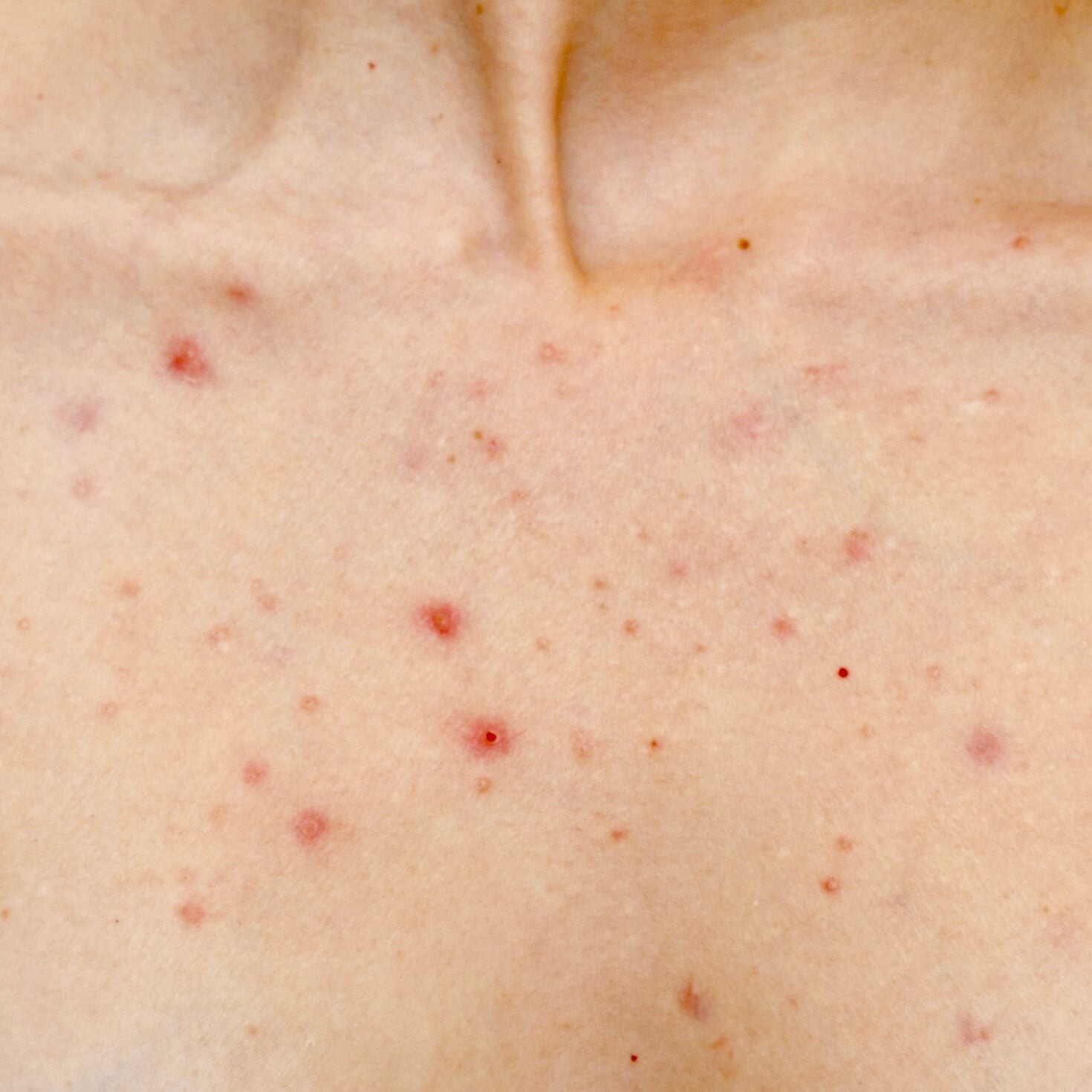
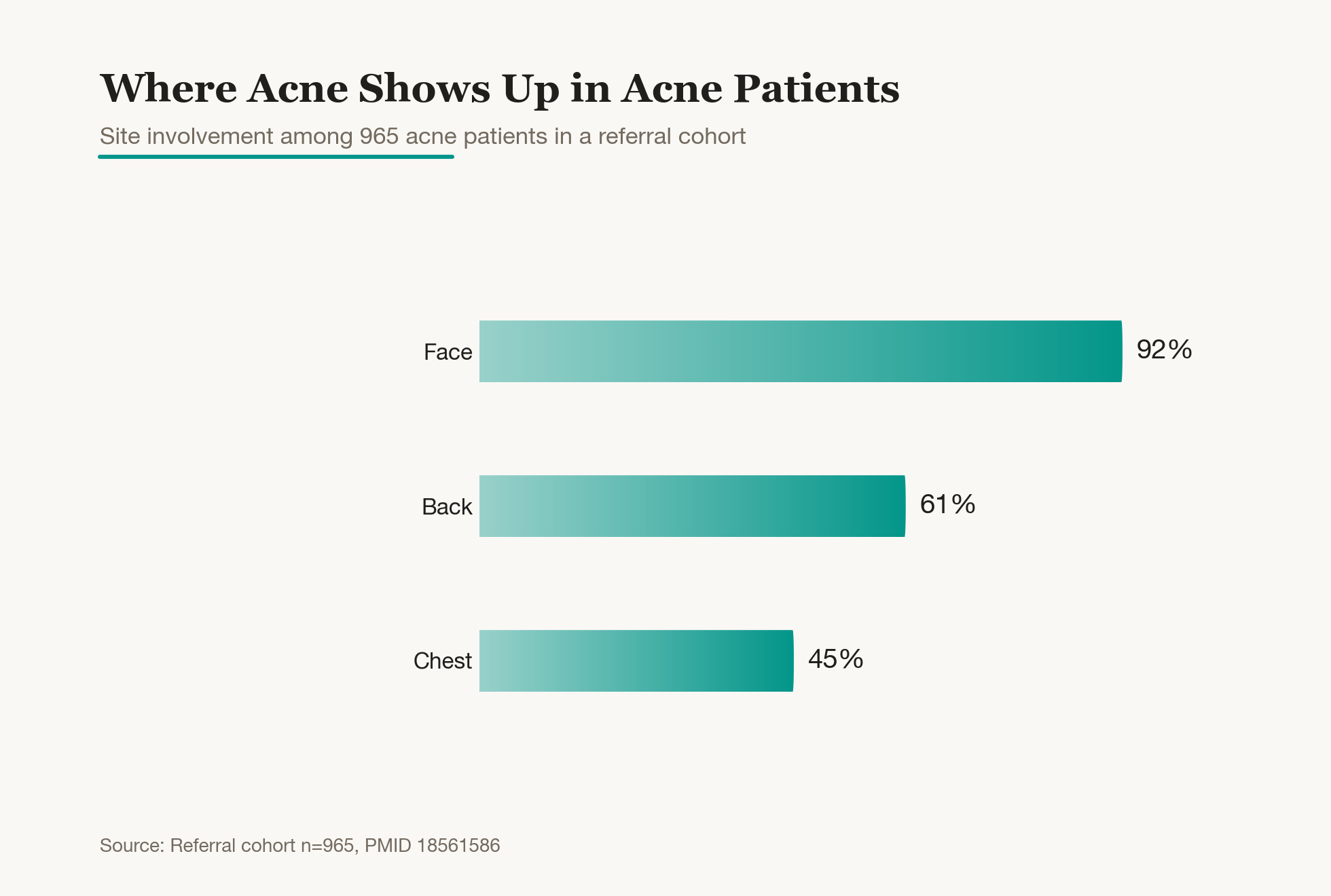
If you've noticed breakouts right where your bra strap sits or where a necklace rubs against your skin, you're not imagining things. It's easy to assume chest acne is just facial acne that migrated south, but the two actually work a little differently. On the face, oil gland activity does most of the heavy lifting. On the chest and back, sweat, friction, and a blocked follicle environment tend to matter more.
Not every bump on your chest is acne either. Some breakouts that look like classic acne are actually caused by a completely different organism, Malassezia folliculitis. Let's go through why chest skin reacts the way it does.
Why does acne appear on the chest of all places?
The skin on your chest packs a lot of hair follicles and sweat glands into a small area. On top of that, bra straps, shirt fabric, and backpack straps press and rub against it all day long, so this area takes more physical irritation than most other parts of the body.
The chest also sweats heavily while staying covered by clothing, which means airflow is limited. When sweat can't evaporate and sits on the skin for too long, it gives moisture and dead skin cells more time to clog the pore opening. That's part of why the same person can break out much more on the chest than on the face.
Seasons matter too. In summer, heat and humidity ramp up together, and a lot of people notice their chest acne getting worse. In winter, layered clothing increases friction, and breakouts tend to reappear in the same spots. Different season, same underlying pattern: sweat and friction keep showing up.
How are the causes different from facial acne?
Facial acne is usually driven by enlarged oil glands and higher sebum output. On the chest and back, though, sweat, friction, and a closed-off environment are thought to play a bigger role than oil production itself.
That's why a skincare routine that works well on the face can fall flat on the chest. Since the underlying causes carry different weight, the order of priorities should shift too. For the face, controlling oil comes first. For the chest, cutting down sweat and friction is usually the better starting point.
Where the breakouts show up tends to differ as well. On the face, acne clusters around the nose, forehead, and chin, where oil glands are dense. Chest acne, on the other hand, often lines up along spots that rub against clothing, like the bra band or the neckline. The fact that breakouts follow the friction points is a pretty good clue for how much friction actually matters here.
How do sweat and friction clog pores?
Sweat is supposed to cool the body and carry waste out through the skin. The problem is when it doesn't dry off. Left sitting on the skin, it mixes with dead skin cells and hardens into a thin plug over the pore opening.
Constant friction between clothing and skin creates a similar outcome through a different path. When skin is repeatedly rubbed, it protects itself by thickening the outer skin layer, but that thickened layer ends up narrowing the pore opening and blocking the path sebum and sweat would normally take to escape. Two different triggers, sweat and friction, land on the same result: a clogged follicle.
Could millet-like bumps be something other than acne?
When small, uniform bumps show up across the chest, it's tempting to call it acne right away, but a good number of these cases turn out to be Malassezia folliculitis instead. Malassezia is a yeast that normally lives on everyone's skin without causing trouble. On a sweaty, humid chest or back, though, it can overgrow and trigger inflammation inside the follicle.
Malassezia folliculitis tends to show up as a cluster of similarly sized bumps that appear all at once, often with itching. Real acne usually looks more varied, with bumps of different sizes, and tenderness when pressed tends to stand out more than itching. Because the underlying organism is different, treatment needs to be different too. Antibiotics or benzoyl peroxide aimed at acne bacteria often don't do much for Malassezia folliculitis, which usually responds better to something with antifungal activity.
What can you do at home?
Chest acne often improves noticeably just from adjusting daily habits, no procedures needed. That said, understanding why each step helps makes it a lot easier to actually stick with it.
- Shower as soon as possible after sweating heavily or working out. The longer sweat sits on your skin, the longer it has to clog your pores.
- Wash with a body wash containing benzoyl peroxide. Benzoyl peroxide works by oxidizing acne-causing bacteria inside the follicle, which is reported to help with body acne as well.
- Use a product with salicylic acid to help clear dead skin. Salicylic acid is oil-soluble, so it can reach further into oil-clogged pores and soften the buildup that other exfoliants can't get to.
- Choose loose, breathable clothing and sweat-wicking fabrics. This tackles both friction and moisture buildup at the same time.
- Don't stay in sweaty workout clothes for too long. Wet fabric sitting against skin keeps friction and humidity going at once.
When is dermatology treatment needed?
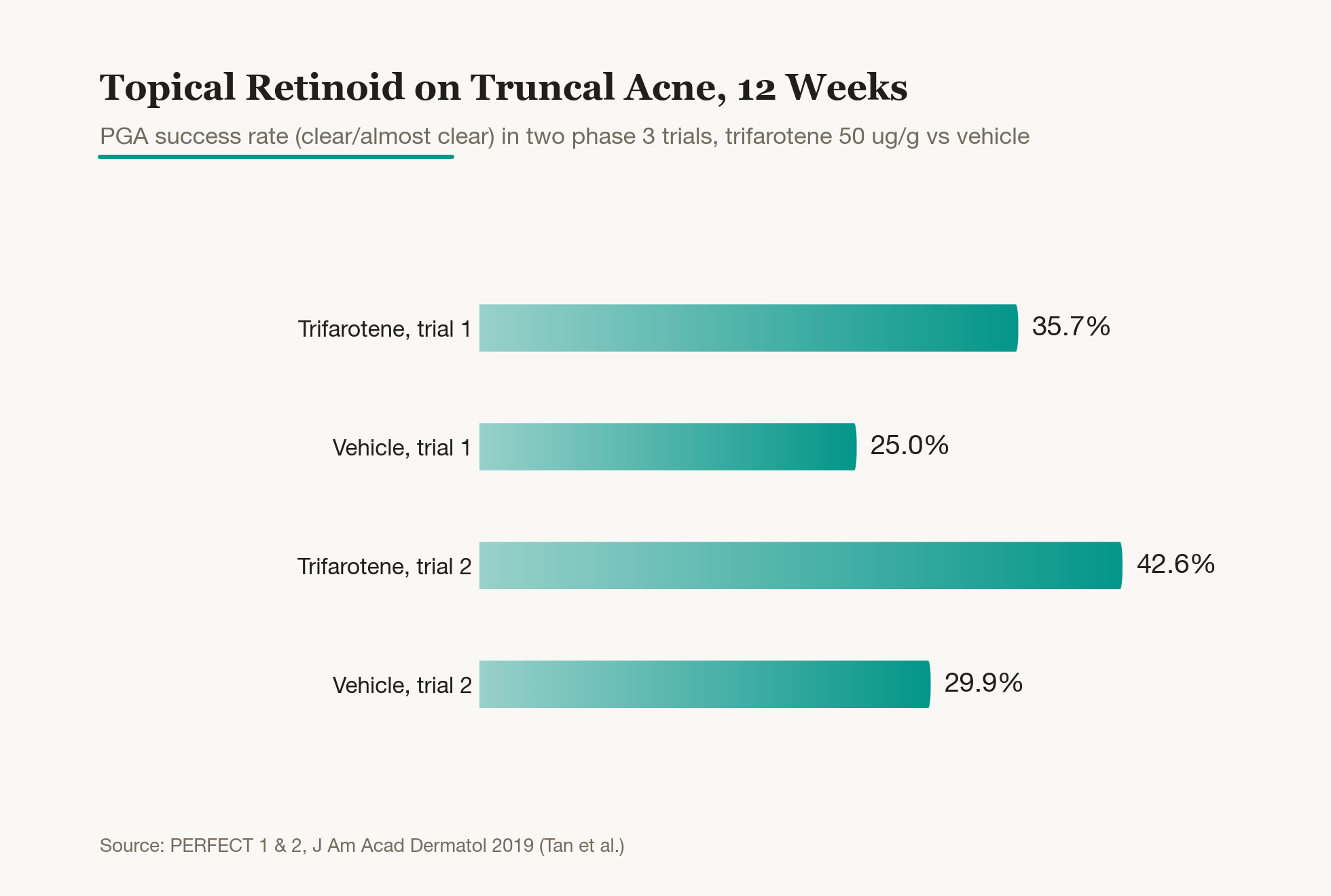
If a few weeks of lifestyle changes haven't made much difference, or if the breakouts are spreading, it's worth getting checked by a dermatologist. Topical retinoids like adapalene work by regulating how dead skin cells build up at the follicle opening, which reduces how often it clogs in the first place.
For more widespread or deeper inflammation, oral antibiotics such as doxycycline are sometimes added, since they suppress acne bacteria growth while calming the inflammatory response itself. Noticeable improvement usually takes around 4 to 12 weeks, and for cases severe enough to leave scarring, stronger options like isotretinoin may be considered. If it turns out to be Malassezia folliculitis, an antifungal ingredient is what actually gets a response, which is exactly why pinning down the real cause matters so much for choosing the right treatment.
Treating both conditions the same way tends to lead nowhere, even after months. So if breakouts across the chest or back haven't budged after a few weeks, it's usually more efficient to get an accurate diagnosis from a dermatologist rather than keep swapping products on your own.
Habits that prevent recurrence
Even after treatment clears things up, chest acne has a habit of returning. The environment that caused it in the first place, sweat, friction, and poor airflow, doesn't just go away on its own, so a relapse is always possible if nothing else changes. Clearing the visible breakouts is only part of the fix; the underlying conditions that created them need to change too.
When choosing sunscreen, a non-comedogenic formula (one made to avoid clogging pores) is a better pick than a heavier, oilier one, since an oily formula can become just another source of pore-clogging irritation. Washing bras and workout clothes frequently also helps, since it keeps oil, sweat, and bacteria from building up in the fabric, which can otherwise transfer right back onto the skin and trigger inflammation in the same spots. None of these habits show results overnight, but sticking with them for about 6 to 12 months is reported to gradually bring down how often breakouts return.
References
Korean Dermatological Association, American Academy of Dermatology (AAD), and Ministry of Food and Drug Safety (MFDS).
Was this helpful?
About this article
Written by a practising aesthetic physician and intended for general education — not a substitute for individual medical advice.
Read next
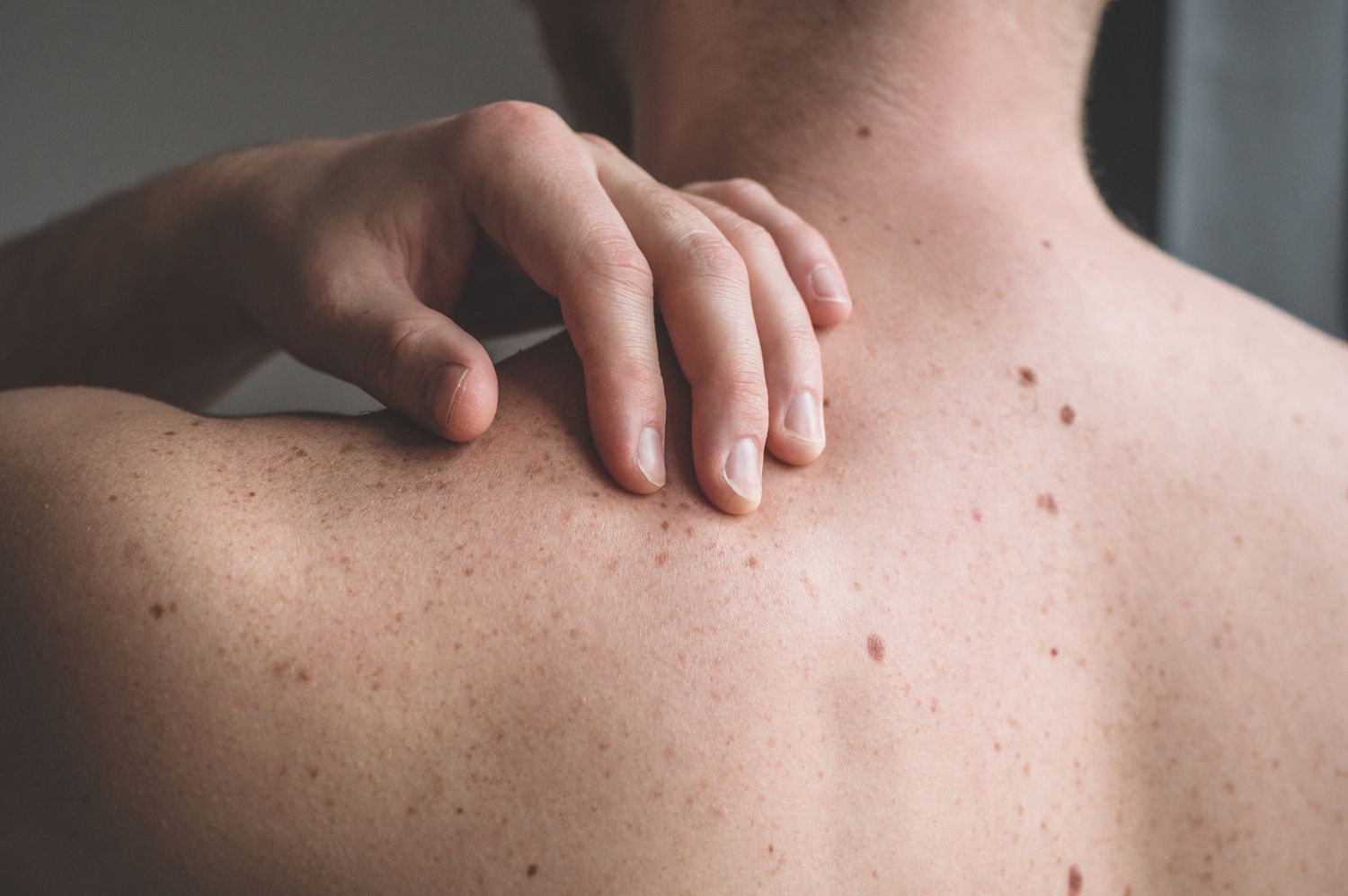
Back Acne: Causes, Treatment Ingredients, Healing Time and Care
Back acne starts from the same root as facial acne, but thicker skin, denser oil glands, sweat, and friction change how it grows. Here is why the back breaks out so easily and why treatment takes longer to work, along with how to manage it.
By Dr. Kim
Sebaceous Hyperplasia: Causes, How to Tell It From Acne, Removal and Recurrence
If you have a yellowish bump on your forehead or cheek that won't go away no matter how much you squeeze it, it might not be acne at all, but sebaceous hyperplasia. Here's an easy breakdown of why enlarged glands form a dimpled bump, how it differs from acne, how electrocautery clears it, and why it tends to come back.
By Dr. Kim
Riehl Melanosis: Causes and Treatment, and Are Cosmetics Really the Cause?
Riehl melanosis is a pigmented contact dermatitis triggered by repeated irritation from cosmetic and perfume ingredients. It looks like melasma on the surface, but the cause and treatment are entirely different. Here's how pigment leaks down into the dermis, why avoiding the trigger is the key to treatment, and what the laser approach looks like.
By Dr. Kim