Popping Pimples: When It's Okay, When It's Not, and Why Scars Form
By Dr. Lee9 min read
You catch a pimple in the mirror and your hand moves before you even think about it. Popping it feels like it'll make the thing vanish right away, and leaving it alone feels like it'll only grow bigger.
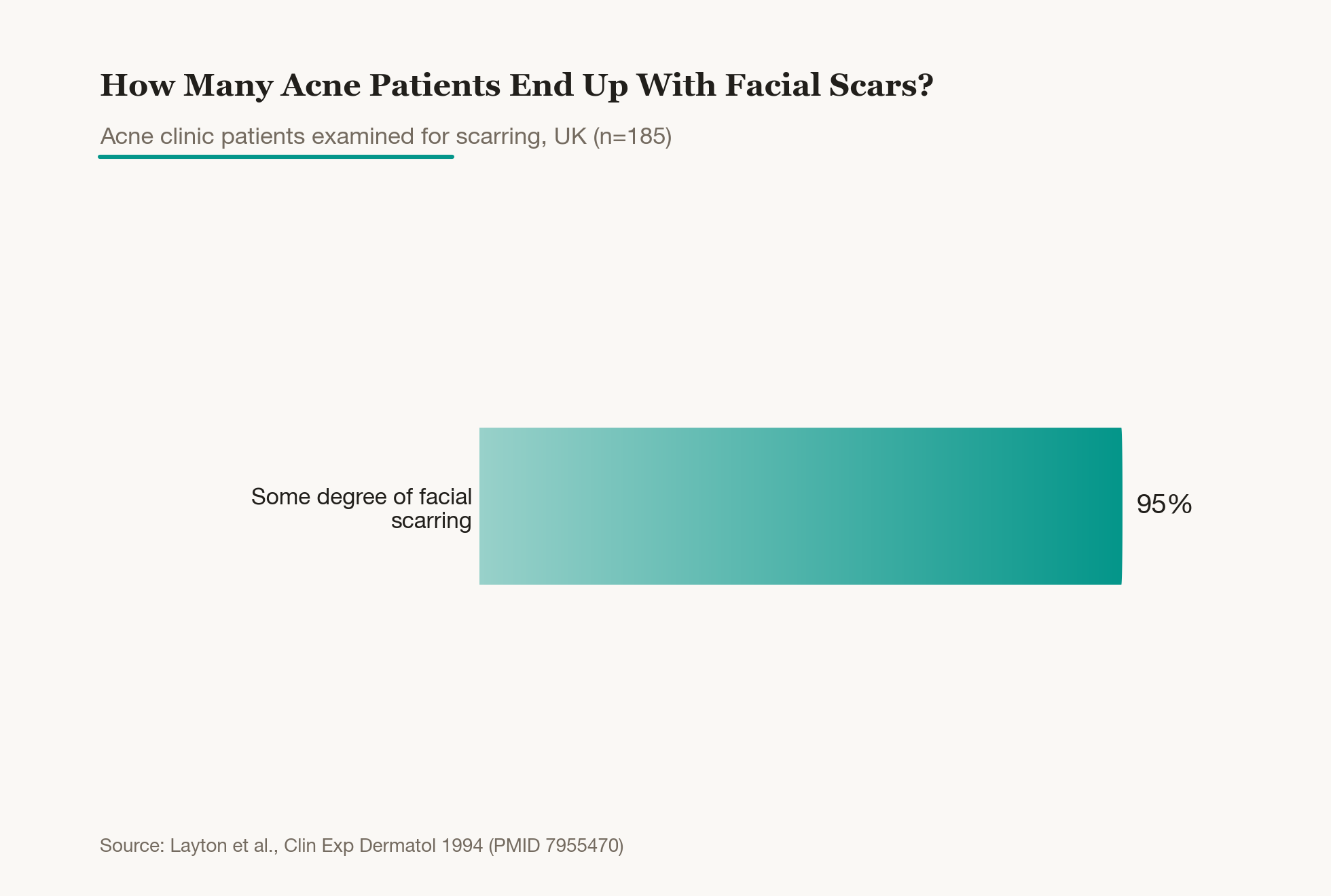
But not every pimple is the same underneath. There's a clear line between the ones that are safe to pop and the ones you should leave alone, and touching the wrong kind usually leaves a mark that sticks around. It won't just fade in 2 or 3 days. Pigmentation can linger for 6 to 12 months, and a pitted scar can stay permanently if it's never treated. Today we'll walk through how to draw that line, and why the cortisone injections dermatologists give in clinic matter.
Are whiteheads and blackheads okay to pop?
A pore clogs when sebum, skin oil, and dead skin cells build up inside it. That clogged state is called a comedone.
A whitehead is a comedone sealed shut all the way to the surface, so the trapped oil and dead skin look like a white lump. A blackhead is the same mixture with the pore opening left exposed, so the contents oxidize on contact with air and turn dark. They look different in color, but the material inside is identical.
Both share one thing in common: the follicle wall, the thin membrane wrapping the pore, hasn't ruptured yet. Think of it like a bag of trash. While the bag is still intact, you can carefully take out what's inside. Once it's torn and the contents have spilled, touching it only makes more of a mess. A comedone is the intact-bag version, meaning the inflammation hasn't reached the deeper tissue. That's why applying the right amount of pressure to draw out just the contents clears things up without doing real damage to the skin.
That said, an intact bag doesn't mean you can press however hard you like. Digging in with a fingernail can rupture a follicle wall that was perfectly fine to begin with. So when extraction is called relatively safe, it doesn't mean touching it is always fine. It means it's safe only when it's done the right way.
What does a pimple that's safe to pop look like?
You can actually tell quite a bit just by looking. Check for these signs.
- The surface bulges yellow or white and doesn't hurt when pressed: this means the contents have already risen close to the surface, so they come out easily without much pressure.
- The surrounding skin isn't red or swollen: this signals the inflammation hasn't spread to nearby tissue yet, so extracting it carries little risk of pushing it sideways.
- It feels soft rather than hard when touched: a firm, dense lump usually means the inflammation sits deeper, so softness is a sign it's still close to the surface.
- It's within 2 to 3 days old: the longer a comedone sits, the more tightly the oil and dead skin pack inside it, which makes it harder to remove and more irritating to the surrounding skin than a fresh one.
On the other hand, anything red and firm that hurts when pressed, anything visibly swollen with pus underneath, or anything that feels like it has a deep root isn't a candidate for extraction.
How a harmless clogged pore turns red
Sometimes a perfectly ordinary comedone suddenly turns red and painful overnight. It's fair to wonder why.
Pores already host a resident bacterium called C. acnes as part of the skin's normal flora. It usually keeps to itself, but once oil keeps building up and the inside of the pore turns low in oxygen, this bacterium multiplies fast. That's exactly the environment it thrives in.
Once the bacterial population grows, the immune system notices and moves in. Inflammatory signaling molecules get released in the process, pressure builds against the follicle wall, and eventually that thin wall gives way. So a whitehead turning into a red bump within a day or two isn't random. It's the direct result of bacterial growth meeting an immune response.
The same logic explains why acne flares up around puberty or right before a period. Androgens, a class of hormones, stimulate the oil glands and drive up sebum production, so more comedones form and more of them get the chance to turn inflammatory.
Why does popping after it ruptures leave a scar?
A red, swollen papule or a pus-filled pustule already has a ruptured follicle wall. That means bacteria and oil have leaked past the pore, into the dermis, the deeper layer that supports the skin.
The body launches an inflammatory response to fight off that intrusion, and levels of an enzyme called MMP rise in the process. Think of MMP as scissors that snip collagen. Collagen acts like the support beams holding up skin's firmness, and when MMP keeps cutting those beams down, the skin caves in, forming what's known as an atrophic scar.
The problem is that the beams don't rebuild themselves once the cutting stops. The body tries to lay down new collagen to fill the gap, but that rebuilding often can't keep pace with the damage. So the bigger and longer the inflammation runs, and the more it gets poked and prodded, the more likely the sunken spot hardens into a scar instead of filling back in.
Popping it by hand at this stage only makes things worse. The pressure from a finger pushes inflammatory material deeper and wider into the tissue around the already-ruptured follicle wall. That widens the zone of inflammation, which means more collagen gets damaged and the odds of a lasting scar climb even higher.
Difference between scars and red marks
The mark a healed pimple leaves behind actually falls into two different categories, and a lot of people worry about both the same way without realizing they're not the same problem.
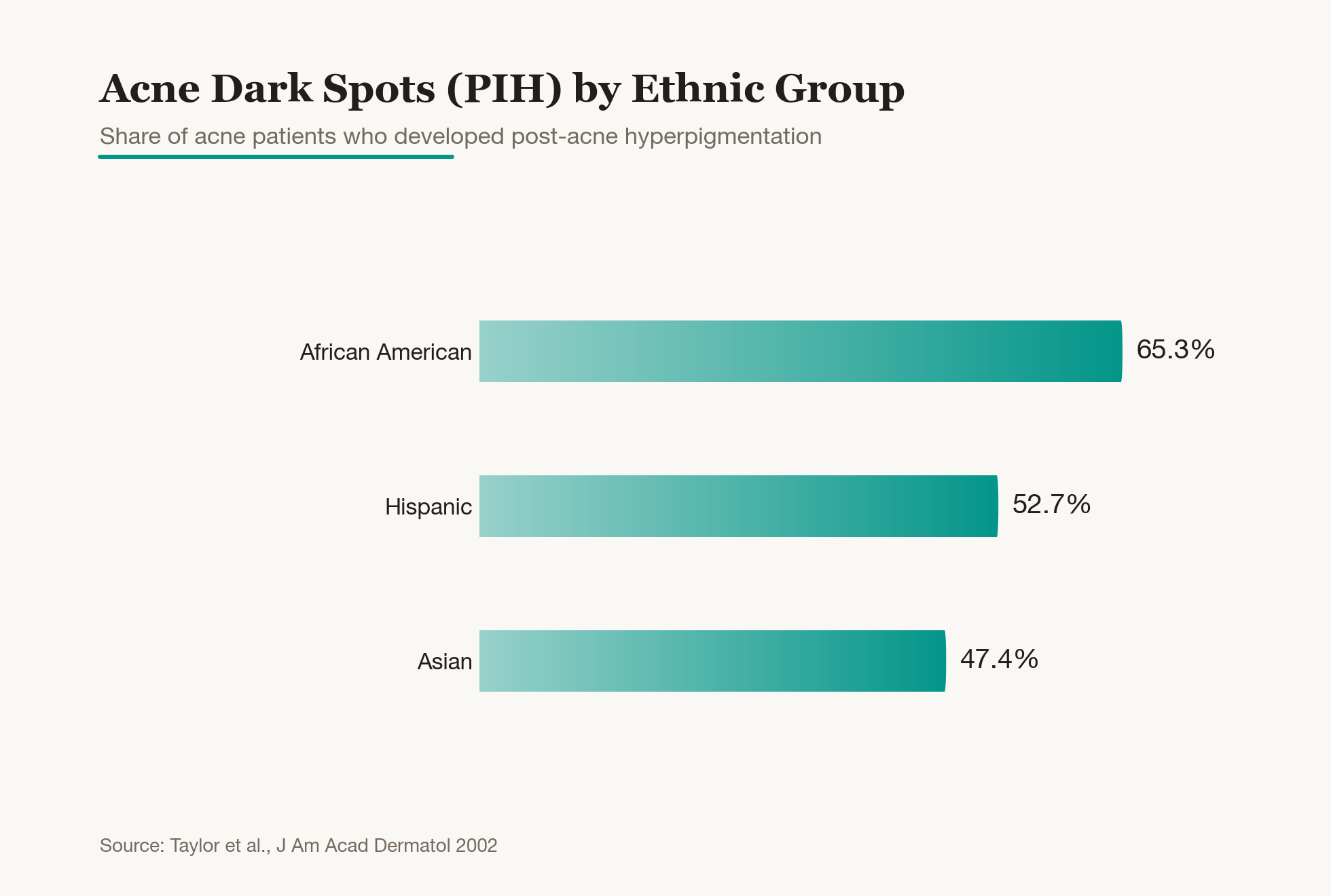
A red or brown mark is post-inflammatory pigmentation. It happens when melanin pigment temporarily concentrates where the inflammation was, or when dilated capillaries linger at that spot. It's a surface-level color issue, so it fades gradually on its own, and consistent sunscreen use is known to speed that fading along.
A sunken pit or a raised, bumpy scar is a different story entirely. It's the direct result of the collagen beams collapsing, meaning the physical structure of the skin has actually changed. Because it's a texture problem rather than a color problem, it improves far more slowly on its own and tends to be harder to manage than pigmentation. Figuring out whether the mark you're looking at is a color issue or a texture issue is genuinely useful for deciding how to treat it.
Why large inflamed pimples need an injection
The acne injection given in clinic is typically a very low concentration of a corticosteroid delivered directly into the lesion.
Corticosteroids reduce the production of inflammatory signaling molecules called cytokines and narrow the surrounding blood vessels, which limits how much blood and inflammatory cells rush to the area. Reports suggest swelling and pain can noticeably ease within 1 to 2 days of the injection.
The key point is that this shot doesn't physically squeeze anything out of the lesion. It calms the inflammatory response itself, chemically, which causes far less damage to surrounding tissue than pressing it out by hand would. That's why this injection is generally recommended over extraction for large, firm, inflamed lesions that are prone to scarring.
What goes wrong when you pop them at home?
It's completely understandable to want to squeeze it out yourself, but here's why that's not recommended.
- Hands and fingernails are rarely fully sanitized, so squeezing can introduce new bacteria into the pore and make the inflammation worse.
- It's hard to judge the right angle and pressure on your own, so instead of coming out cleanly, the contents can end up pushed sideways into nearby tissue, which actually widens the inflamed area.
- Pressing and touching the same spot over and over keeps irritating the skin, which makes it more likely that the inflammation lingers and turns into pigmentation, that lasting brown or red discoloration where the pimple used to be.
Deep-rooted nodules and cysts in particular should never be squeezed by hand. These lesions aren't the kind of problem extraction can fix; they need an injection or another clinical treatment.
If you still need extraction, where should you go?
Even surface-level comedones like whiteheads and blackheads are safest when handled with properly sterilized tools and controlled pressure in a clinical setting. A dedicated extraction tool, a comedone extractor, spreads the pressure evenly and reduces damage to the surrounding tissue.
Red, painful, or deeply pus-filled lesions are a different matter. Calming the inflammation should come first, before extraction is even considered. Attempting extraction on one of these forces open a pocket of pus that hasn't fully formed yet, which can end up slowing recovery rather than helping it.
How to care for the spot afterward
Even if the lesion was one that was safe to extract, the pore is left open right after, which makes it vulnerable to outside irritation. The most important thing during this window is simply not touching it again.
Sun exposure right after extraction also makes it easier for brown pigmentation to settle into that spot, so reaching for sunscreen is known to help. Pairing that with a gentle, soothing product can also help calm any residual irritation.
References
Korean Dermatological Association, Ministry of Food and Drug Safety (MFDS), American Academy of Dermatology (AAD), and U.S. Food and Drug Administration (FDA).
Was this helpful?
About this article
Written by a practising aesthetic physician and intended for general education — not a substitute for individual medical advice.
Read next
Cystic Acne: Causes, Treatment and Why You Shouldn't Squeeze It
Cystic acne forms when inflammation spreads deep beneath the pore, not just on the surface. Unlike surface pimples, it damages the dermis and often leaves lasting scars. Here's why it grows so deep and hard, and how dermatology treatment brings it back down.
By Dr. Kim
Flat Wart Causes and Symptoms: Why They Spread When Squeezed, and Treatment
Flat warts are a viral skin condition, so picking or scratching at them doesn't clear them up, it spreads them further. Here's why that happens, how to tell them apart from moles or acne, and the logic behind removal and preventing recurrence.
By Dr. Kim

Rosacea and Acne Differences: How to Tell Them Apart by Comedones and Flushing
If your face flushes easily and the redness never quite settles, it might not be acne at all. Here is how to tell rosacea and acne apart by checking for blackheads, where the redness sits on your face, and how your skin reacts to heat and irritation.
By Dr. Kim